


A trapper hat is built for cold weather first. Its defining features are a warm crown, substantial ear flaps and enough coverage to protect the sides of the head from wind. Depending on the design, it may use leather, sheepskin, natural fur or faux fur, with ear flaps that can be worn down, tied under the chin or secured above the crown.
For men shopping online, the difficult part is not finding a winter hat that looks warm. It is choosing one that actually fits your head, covers your ears properly and uses materials that match the weather you expect to wear it in.
This trapper hat buying guide explains how to compare fit, warmth, ear-flap construction, materials and practical details before ordering.
Table of Contents
What Is a Trapper Hat?
A trapper hat is a cold-weather hat with extended ear flaps. Many designs cover not only the ears but also part of the cheeks and the back of the head, making them especially practical in wind and low temperatures.
The term is broad. Some trapper hats have a leather outer shell with a warm lining. Others use sheepskin, fur or faux fur more prominently. You may also see similar designs described as aviator hats, bomber hats or ushankas.
Rather than relying only on the product name, look at the actual construction: how far the ear flaps extend, how the lining is attached, whether the flaps can be secured in different positions and how closely the hat sits around the head.
Trapper Hat vs Ushanka: What’s the Difference?
Trapper hat is a broad English retail term for warm ear-flap hats. Ushanka refers to the traditional Russian-style ear-flap hat whose name is closely associated with its fold-down ear protection.
In modern shopping results, the two terms often overlap. A leather hat with large ear flaps may be marketed as a trapper hat, an ushanka or both.
The practical distinction for a buyer is simple:
- choose by coverage, not by label;
- check whether the flaps fully cover your ears;
- look at how the flaps fasten under the chin or over the crown;
- and confirm the outer and lining materials separately.
If you want a broader comparison of traditional winter styles, see our Ushanka vs Börk vs Kalpak vs Papak guide.
How Warm Is a Trapper Hat?
A trapper hat can be one of the warmest practical hat shapes because it protects more than the top of the head. The ear flaps reduce direct wind exposure around the ears and sides of the face, while the crown and lining help retain warmth.
There is no honest universal temperature rating for every trapper hat. Warmth depends on:
- the thickness and density of the lining;
- the outer material;
- how closely the hat fits;
- how completely the ear flaps close around the sides of the head;
- wind speed and humidity;
- and the wearer’s activity level.
A loose hat can allow cold air to move around the ears even if the lining itself is thick. A correctly fitted hat with effective ear coverage can feel significantly warmer in windy conditions.
Which Materials Should You Choose?
Leather outer shell
Leather helps block wind and gives a trapper hat structure. Lamb leather is especially useful when a softer and more flexible feel is preferred, while heavier leathers can create a firmer, more rugged hat.
The exact leather should be stated clearly in the individual product description.
Sheepskin and shearling
Sheepskin combines leather and wool in one natural material. The wool side provides insulation while the leather side gives structure and wind resistance. Natural sheepskin can vary slightly in wool density, curl and tone.
Natural fur
Some trapper-style hats use natural fur such as rabbit or other fur types as trim or lining. These materials can create a very soft feel and a traditional winter appearance. Because fur species differ in density, texture and care requirements, the product description should identify the actual material rather than using only the generic word “fur.”
Faux fur
Faux fur offers a different material choice for buyers who prefer a synthetic option. Quality varies considerably, so photographs of the pile, density and interior construction are useful when comparing products.
Whichever material you choose, do not assume that two hats with a similar appearance use the same construction. Check the outer material, lining and trim separately.
How Should a Trapper Hat Fit?
A trapper hat should feel secure around the head without creating pressure on the forehead or temples.
The fit matters for warmth because the hat needs to stay in position when the ear flaps are down. If it is too loose, the crown can shift and the flaps may sit away from the ears. If it is too tight, long periods of wear can become uncomfortable.
For DeriSitesi hats, adult sizing is based on head circumference:
| Size | Head circumference (cm) | Head circumference (in) |
|---|---|---|
| XS | 53–54 cm | 20.9–21.3 in |
| S | 55–56 cm | 21.7–22.0 in |
| M | 57–58 cm | 22.4–22.8 in |
| L | 59–60 cm | 23.2–23.6 in |
| XL | 61–62 cm | 24.0–24.4 in |
| 2XL | 63–64 cm | 24.8–25.2 in |
| 3XL | 65–66 cm | 25.6–26.0 in |
If you are between sizes, the lining thickness and the way you prefer the hat to sit can affect the best choice. Do not rely only on the size label from another brand.
How to Measure Your Head
Use a soft measuring tape around the widest part of your head, usually just above the eyebrows and ears. Keep the tape level all the way around and do not pull it tight.
Measure at least twice. If the results differ, measure again rather than averaging two clearly different numbers.
For a complete measurement walkthrough, see our Leather Hat Sizing Guide.
Ear Flaps, Chin Straps and Coverage
The ear flaps are the most important functional difference between a trapper hat and a standard winter cap.
Ear flaps worn down
This gives the maximum ear and side-head coverage. It is the most useful position in wind, snow or prolonged cold.
Flaps secured under the chin
This can help keep the hat stable in strong wind. Check that the fastening system is comfortable and does not create unnecessary pressure.
Flaps tied above the crown
This reduces coverage and gives the hat a more compact look when full ear protection is not needed.
Before buying, look at photographs of the hat in more than one position. A product photo with the ear flaps tied up does not show how much coverage they provide when fully lowered.
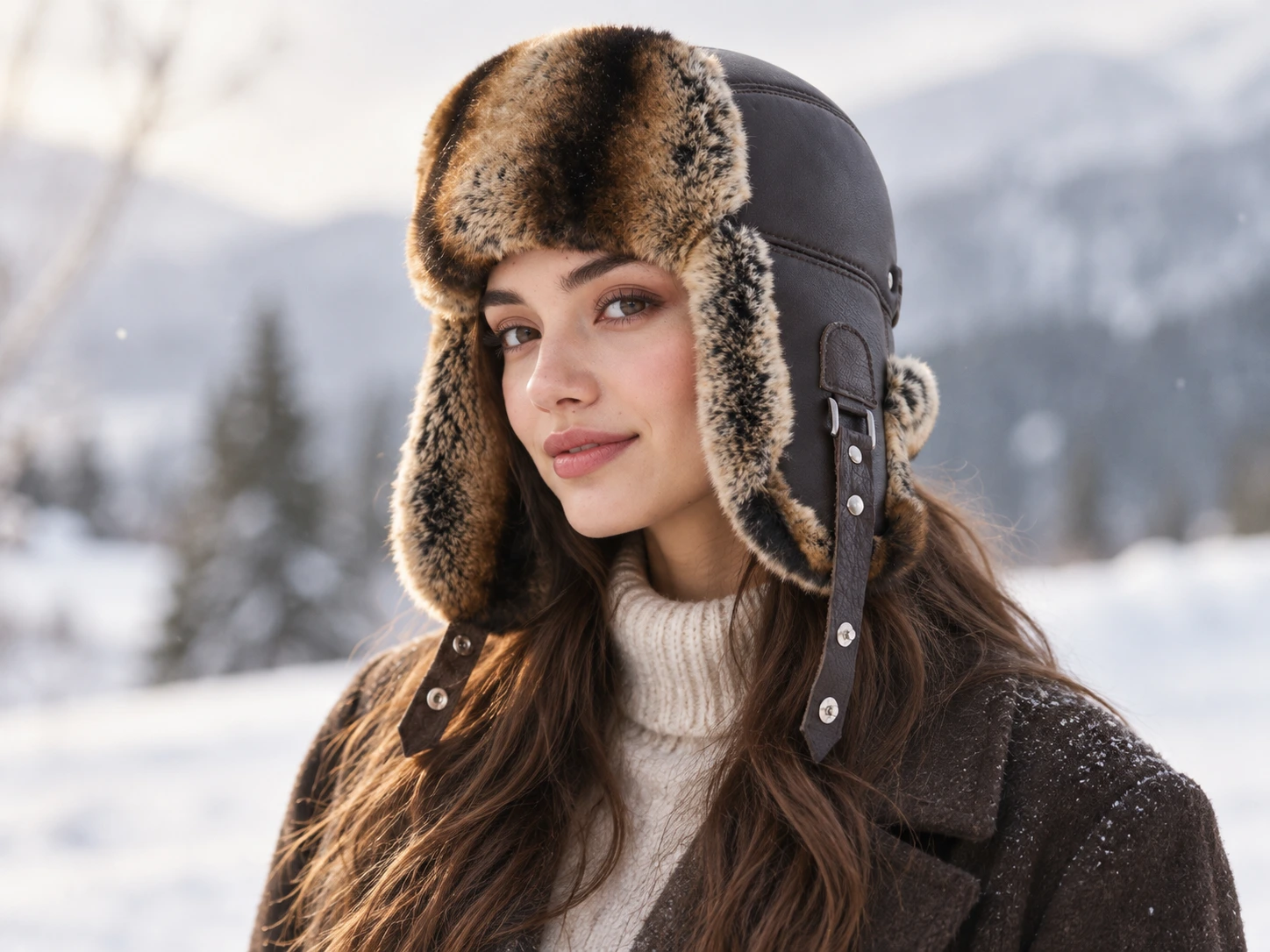
Which Trapper Hat Style Is Right for You?
For maximum winter coverage
Choose a design with large ear flaps, dense lining and a secure fastening system. A leather or sheepskin outer can also help reduce wind penetration.
For everyday city wear
A lower-profile trapper hat with less bulky trim may be easier to combine with coats and jackets while still protecting the ears.
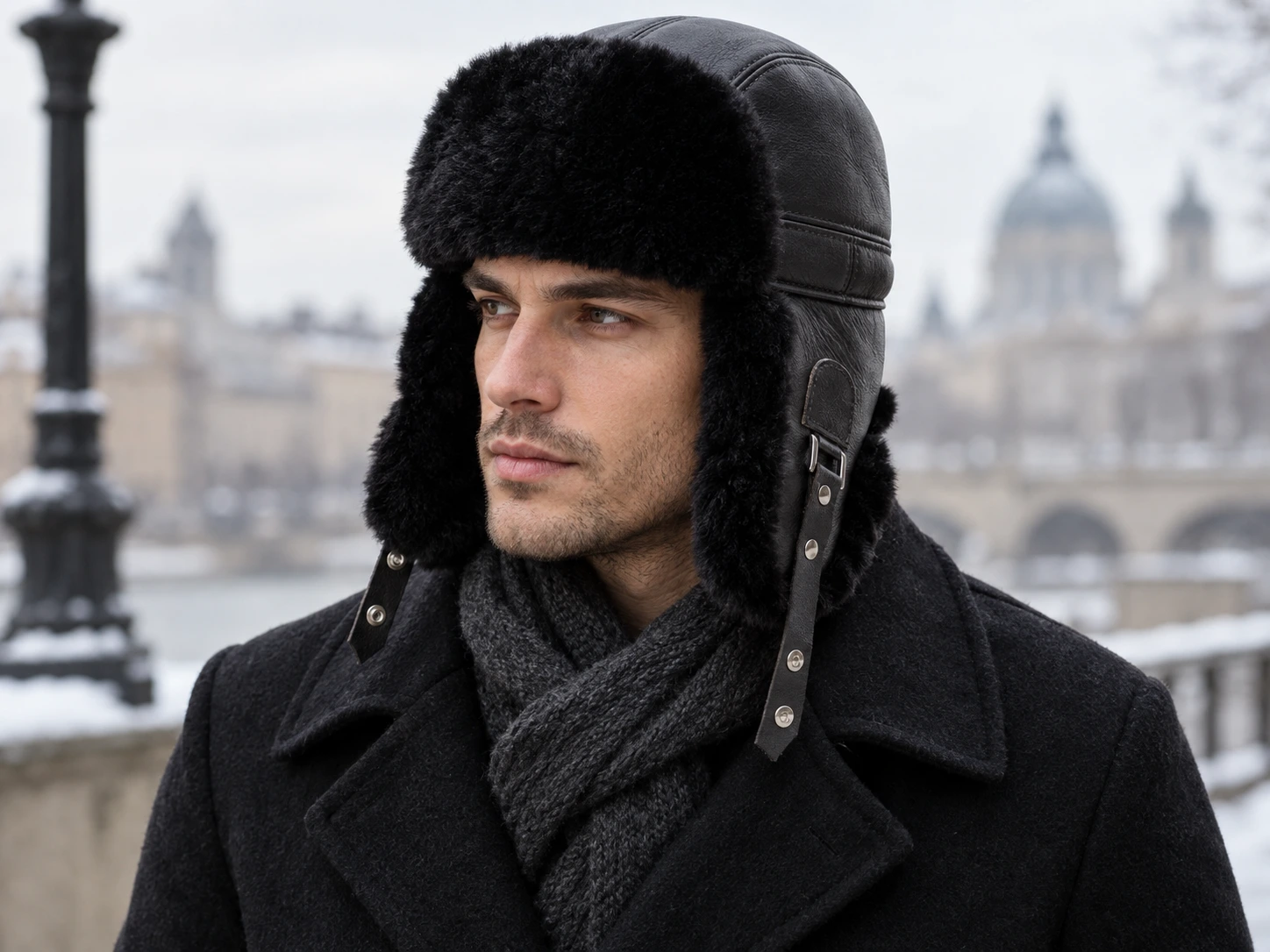
For an aviator look
Leather aviator or bomber-style hats usually have a closer-fitting crown and prominent ear coverage. They work especially well when you want a more structured leather appearance.
For a traditional ushanka look
Choose a fuller, more symmetrical ear-flap design with a strong winter silhouette. If cultural styling matters to you, compare the construction rather than relying only on the word “trapper.”
What to Check Before Buying Online
Before ordering a trapper hat, check:
- Exact material: outer, lining and trim should be identified separately.
- Head circumference: use centimeters or inches rather than only S, M, L or XL.
- Ear-flap length: make sure the flaps actually cover your ears.
- Fastening system: chin ties, buckle, strap or other closure.
- Interior construction: especially important for comfort.
- Weight and bulk: useful if you want an everyday hat rather than a very heavy winter piece.
- Return and exchange conditions: especially for international orders.
- Custom sizing: ask before ordering if your measurement is outside the listed range.
If you are still comparing general leather-hat construction and materials, our Leather Hat Buying Guide covers the broader decision process.
What Buyers Notice Most
What winter-hat buyers often mention
Public Etsy feedback for DeriSitesi winter hats frequently mentions warmth, craftsmanship, fit, ear protection and fast international delivery.
Because fit strongly affects comfort and coverage, we recommend measuring your head before ordering instead of choosing only by a familiar size label.
How to Care for a Trapper Hat
Care depends on the exact combination of leather, sheepskin, fur or faux fur used in the hat.
- Let a damp hat dry naturally at room temperature.
- Keep it away from radiators, hair dryers and direct high heat.
- Do not store it crushed under heavy items.
- Shake or gently reshape the lining after storage.
- Use only cleaners suitable for the specific leather or fur type.
- Test any care product on a hidden area first.
For serious stains or valuable natural-fur components, professional cleaning is safer than aggressive home treatment.
Trapper Hat FAQ
Is a trapper hat the same as an ushanka?
Not exactly, although the terms overlap in modern retail. Trapper hat is a broad English term for warm ear-flap hats, while ushanka refers to a specific traditional Russian-style ear-flap hat.
Are trapper hats good for very cold weather?
They can be excellent in cold weather because they cover the ears and sides of the head. Actual warmth depends on fit, lining, materials and wind exposure.
Should a trapper hat fit tightly?
It should fit securely but should not create painful pressure. A hat that is too loose can shift and reduce ear coverage.
Which is warmer: leather or sheepskin?
They serve different roles. Leather is useful for structure and wind resistance, while sheepskin combines a leather hide with insulating wool. Many warm hats use both qualities in the same construction.
Can trapper hat ear flaps be worn up?
Many designs allow the flaps to be secured over the crown as well as worn down. Check the individual fastening system before ordering.
Can I order a custom-size trapper hat?
Some handmade models can be produced in special sizes. Ask the seller before ordering and provide an accurate head circumference.
Are natural fur and faux fur trapper hats the same?
No. They differ in fiber structure, feel, care and appearance. The product description should clearly identify the material used.
Explore Cold-Weather Leather Hats
Looking for a trapper-style or ear-flap winter hat? Compare current men’s leather hats by material, lining, ear coverage and size.
Choosing a Handmade Trapper Hat from DeriSitesi
The best trapper hat is the one that matches your actual winter use. Start with your head circumference, decide how much ear coverage you need, then compare the outer material, lining and fastening system.
DeriSitesi produces handmade leather winter hats in Istanbul in a range of sizes and constructions. Materials vary by model, so check the individual product description for the exact leather, sheepskin, natural fur or faux-fur components used.
Browse our Men’s Leather Hats to compare current winter styles, or read the Papakha Hat Guide if you are deciding between an ear-flap hat and a taller traditional winter silhouette.