


An ushanka hat is a cold-weather hat best recognized by its fold-down ear flaps. The flaps can protect the ears and sides of the head when worn down, and many designs can also be secured above the crown or behind the head when full coverage is not needed. Ushanka meaning: the Russian name is connected with ushi (“ears”), referring to the ear flaps that define this winter hat.
Although the ushanka is strongly associated with Russian and Soviet winter clothing, ear-covering hats existed across northern Eurasia in several forms long before the modern ushanka became standardized. For today’s buyer, however, the most useful way to understand an ushanka is through its construction: the crown, ear flaps, lining, fastening system and the materials used in each part.
This guide explains what an ushanka is, what the name means, how the ear flaps work, which materials are common, how fit affects warmth and what to check before buying one. If you want a direct comparison with trapper, aviator and bomber styles, see our Ushanka vs Trapper, Aviator & Bomber Hats guide.
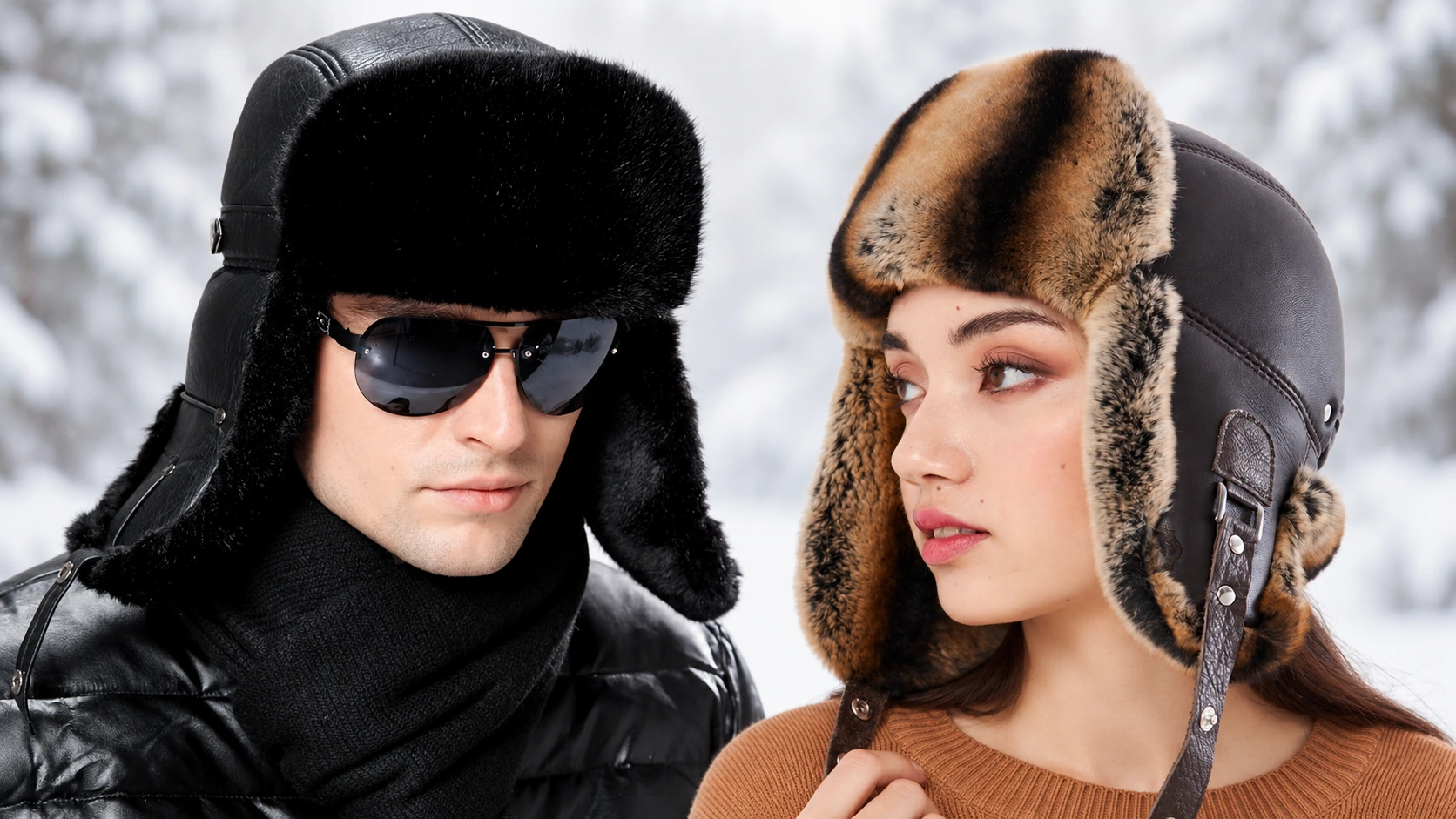
Table of Contents
- What Is an Ushanka Hat?
- What Does “Ushanka” Mean?
- A Short History of the Ushanka
- How Do Ushanka Ear Flaps Work?
- Main Parts of an Ushanka Hat
- What Materials Are Ushanka Hats Made From?
- What Makes an Ushanka Warm?
- How Should an Ushanka Fit?
- Ushanka vs Trapper, Aviator and Bomber Hats
- What to Check Before Buying an Ushanka
- How to Care for a Leather or Sheepskin Ushanka
- Ushanka Hat FAQ
What Is an Ushanka Hat?
An ushanka is an ear-flap winter hat designed to give extra coverage around the ears and sides of the head. The most recognizable feature is a pair of flexible side flaps that can be worn in different positions depending on weather and construction.
A classic ushanka usually combines three functions:
- a crown that covers the top of the head;
- ear flaps that can be lowered for additional protection;
- a fastening system that lets the flaps stay up, down or secured in another position.
Modern versions vary considerably. Some are made primarily from fur, some use leather with sheepskin lining, and others use textiles or faux fur. There is no rule that every ushanka must use one specific material. Our Mongolian-style fur hat comparison shows how those material differences appear on three actual winter-hat models.
That is why the product name alone is not enough. A good ushanka description should tell you what the exterior is made from, what lines the inside, how long the ear flaps are and how they fasten.
What Does “Ushanka” Mean?
The Russian word ushanka is connected with ushi, meaning “ears.” The name therefore describes the feature that defines the hat: ear-covering flaps.
In English, you may also see descriptions such as Russian ear-flap hat, fur ear-flap hat or, in retail contexts, trapper hat. These terms can overlap, but “ushanka” refers most specifically to the traditional Russian-style ear-flap form.
Collins describes an ushanka as a Russian fur cap with ear flaps that can be secured up or fastened down. That basic definition is useful, but modern ushankas are not limited to fur-only construction.
A Short History of the Ushanka
Ear-covering winter hats have a much older history than the modern standardized ushanka. Cold-climate headwear with protective side or neck sections appeared in different parts of northern Eurasia, including Russian, Central Asian and neighboring traditions.
Russia’s Culture.ru notes that several older headwear forms are discussed as possible predecessors, including the Russian treukh and related northern and Central Asian ear-covering hats. The exact route by which the modern ushanka developed is not presented as one simple, universally agreed line of descent.
The modern military-style ushanka became much more recognizable during the twentieth century. Culture.ru describes ushanka-type winter caps entering Soviet military use in the early 1930s, while museum collections preserve wartime military ushankas from the 1940s.
Today the ushanka is used far beyond military clothing. It appears in civilian winter wear, outdoor clothing, fashion and heritage-inspired designs in many countries.
How Do Ushanka Ear Flaps Work?
The ear flaps are the feature that makes an ushanka function differently from a simple winter cap.
Ear flaps worn down
With the flaps lowered, the hat can cover the ears more completely and may also protect part of the cheeks or the back of the head, depending on the model. This position is usually the most practical in cold wind.
Ear flaps secured above the crown
Many ushankas allow the flaps to be tied, strapped or buckled above the crown. This reduces side coverage while keeping the flaps out of the way.
Ear flaps secured behind the head
Some constructions also allow the flaps to be fastened toward the back. Whether this position is comfortable depends on flap length and the fastening system.
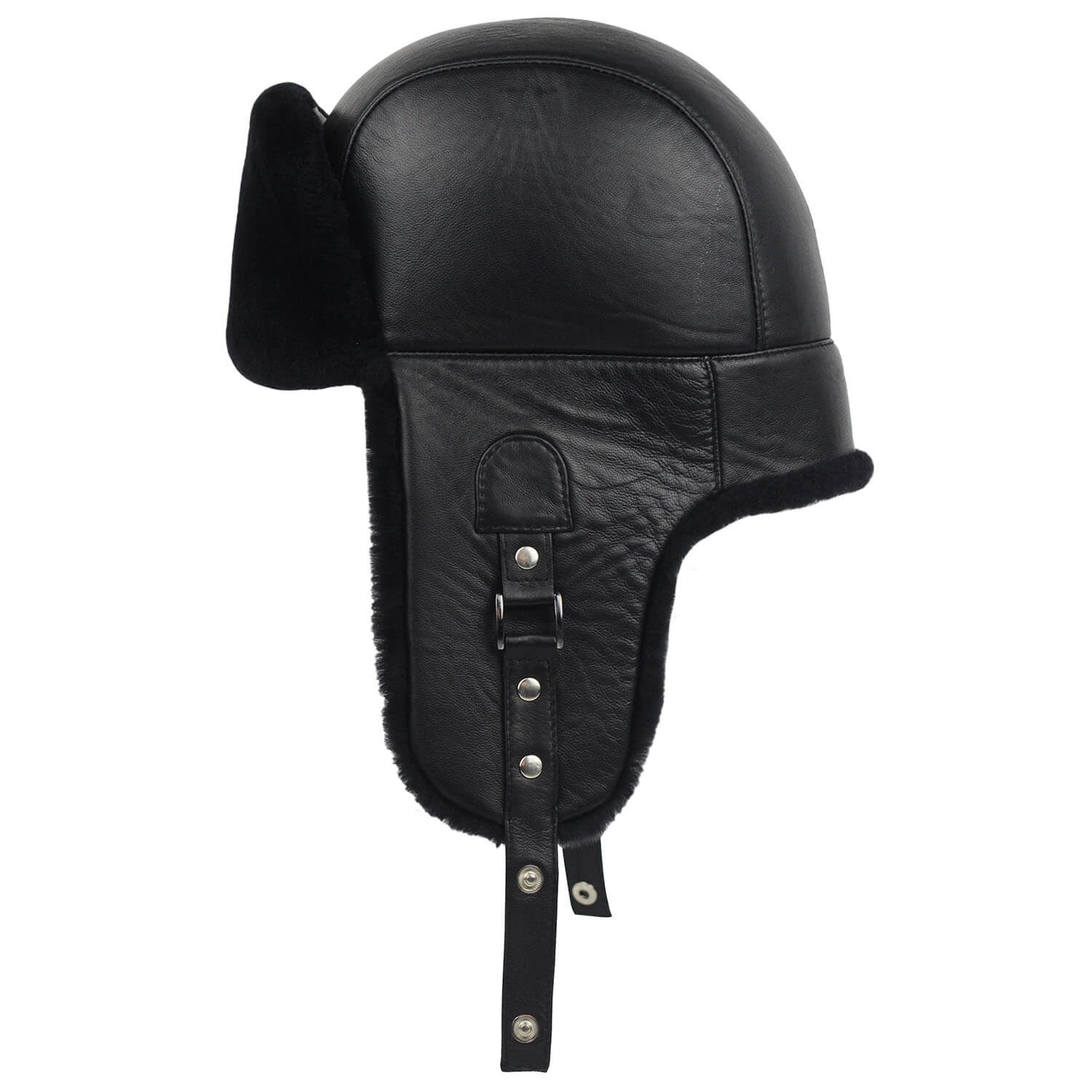
Not every ushanka can be worn in every configuration. Leather thickness, fur density, buckle position and strap length can all change how easily the flaps move. Always check the actual product photos rather than assuming a standard mechanism.
Main Parts of an Ushanka Hat
Modern ushankas can look very different, but several construction areas are worth checking.
Crown
The crown forms the main body of the hat. It may be made from leather, sheepskin, fur, textile or a combination of materials. A more structured leather crown can create a closer and cleaner silhouette, while softer constructions may look fuller.
Ear flaps
The length and shape of the flaps determine how much of the ears and sides of the face can be covered. Some are compact; others extend lower toward the jawline.
Front flap or forehead section
Many traditional-style ushankas have a front section that visually mirrors the fur or lining used around the ears. It may be fixed or constructed separately depending on the design.
Fastening
Ties, leather straps, snaps and buckles are all possible. A fastening should hold the flaps securely without creating uncomfortable pressure.
Interior lining
The lining strongly affects warmth and fit. Thick natural sheepskin can take up more interior space than a light textile or quilted lining, so two hats with the same labeled size can feel different.
What Materials Are Ushanka Hats Made From?
There is no single “correct” ushanka material. Historical and modern versions use different materials according to climate, budget, intended use and style.
Leather
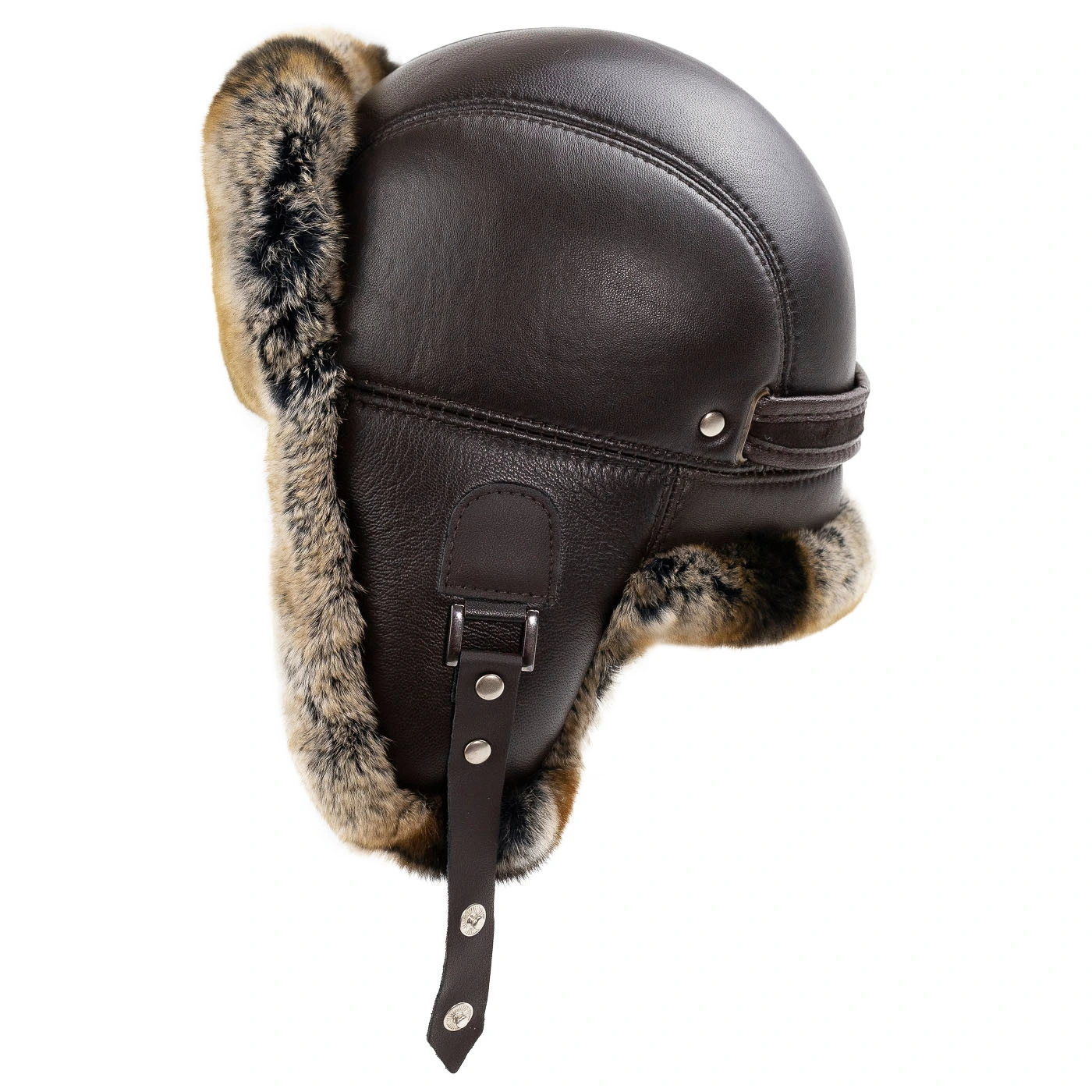
Genuine lambskin or sheepskin leather is common in modern premium ushanka and aviator-style hats. It gives the crown a defined shape and can reduce direct wind exposure. Natural grain and small tonal variations are normal in genuine leather.
Sheepskin and shearling
Sheepskin combines leather and natural wool in the same material. Depending on the construction, the wool side may form the interior lining, visible trim or both. Wool density can vary naturally between pieces.
Natural fur
Some ushanka models use genuine fur as visible trim or exterior detail. The species should always be stated clearly on the individual product page rather than assumed from appearance alone.
Faux fur
Faux fur is also widely used and can produce the traditional full winter look without using natural fur. Texture, density and care requirements differ between products.
Textile and quilted linings
Not every ushanka has a full fur interior. A leather outer shell may be combined with a quilted or textile lining, which can make the hat feel lighter and less bulky.
For broader material comparisons, see our Leather Hat Buying Guide.
What Makes an Ushanka Warm?
An ushanka’s warmth comes from more than the category name. The most important factors are:
- how completely the ear flaps cover the ears;
- how closely the flaps sit against the sides of the head;
- the thickness and density of the lining;
- the outer material’s resistance to wind;
- how much of the back of the head and upper neck is covered;
- and whether the hat fits correctly.
A thick ushanka that is too loose can allow cold air to enter around the ears. A correctly fitted leather-and-sheepskin model may feel more protective even if its overall silhouette is less bulky.
For a more detailed explanation of insulation, ear coverage and wind exposure, see our Leather Winter Hats Warmth Guide.
How Should an Ushanka Fit?
An ushanka should feel secure around the crown without painful pressure on the forehead or temples. When the ear flaps are lowered, they should fall naturally over the ears rather than being pulled into place by an undersized crown.
DeriSitesi standard adult sizing on suitable models is:
| Size | Head circumference | Approx. inches |
|---|---|---|
| XS | 53–54 cm | 20.9–21.3 in |
| S | 55–56 cm | 21.7–22.0 in |
| M | 57–58 cm | 22.4–22.8 in |
| L | 59–60 cm | 23.2–23.6 in |
| XL | 61–62 cm | 24.0–24.4 in |
| 2XL | 63–64 cm | 24.8–25.2 in |
| 3XL | 65–66 cm | 25.6–26.0 in |
Use this as a starting point, then check the individual model because thick sheepskin or padded lining can change the internal feel. For the full measuring method and international conversions, use our Leather Hat Sizing Guide.
DERISITESI SHOP · USHANKA HATS
Find the right leather ushanka for winter
Compare leather, sheepskin lining, ear-flap designs and sizing across the available ushanka styles before ordering.
Ushanka vs Trapper, Aviator and Bomber Hats
These terms overlap in modern shopping, so a short distinction is more useful than treating them as rigid categories.
- Ushanka: specifically associated with the Russian-style ear-flap hat form.
- Trapper hat: a broader English retail term for practical cold-weather hats with substantial ear flaps.
- Aviator hat: usually a closer-fitting pilot-inspired design, often made from leather and frequently using an under-chin fastening.
- Bomber hat: a flexible modern retail term that often overlaps with aviator and trapper constructions.
The same physical hat may be sold under more than one of these names. For a full side-by-side comparison, read Ushanka, Trapper, Aviator & Bomber Hats: What’s the Difference?.
For a broader traditional-hat comparison, see Ushanka vs Börk vs Kalpak vs Papak.
What to Check Before Buying an Ushanka
- Measure your head circumference. Do not guess from your usual clothing size.
- Check the outer material. Confirm whether it is genuine leather, sheepskin, textile or another material.
- Check the lining separately. A leather exterior does not automatically mean a sheepskin interior.
- Confirm fur details. If fur is present, verify whether it is natural or faux and, for natural fur, which species is stated.
- Look at the ear-flap length. Product photos should show whether the flaps cover only the ears or extend farther toward the jaw and neck.
- Check how the flaps fasten. Ties, straps, snaps and buckles behave differently.
- Look at side and rear photos. A front photo alone does not show ear and neck coverage well.
- Read care and return terms. Natural leather, sheepskin and fur require more specialized care than ordinary textile hats.
You can compare current models in the DeriSitesi Leather Ushanka Hats collection.
Buying an ushanka as a gift? Our handmade leather gift guide for men compares winter hats, gloves and vests, with practical size-selection tips.
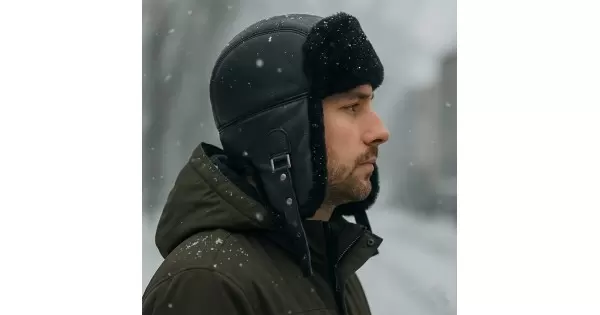
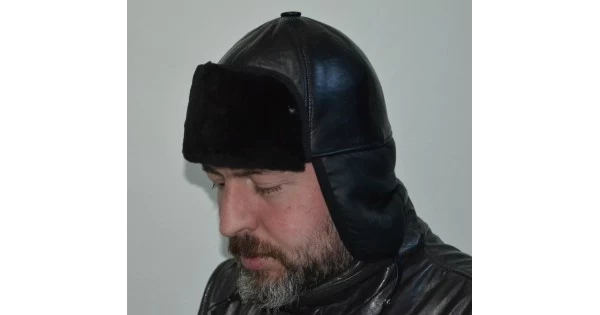
Two Real Ear-Flap Hat Examples: Buckle vs No Buckle
The same general ear-flap idea can appear in different winter-hat designs. These are genuine DeriSitesi product photos, not pictures of identical hats. Check each model’s actual materials, fastening details and head-size options before ordering.
What DeriSitesi customers mention
Public Etsy feedback frequently mentions craftsmanship, fit, materials, warmth and international delivery. For ear-flap winter hats, accurate head measurement and the exact lining description are especially important before ordering.
Explore Handmade Leather Ushanka Hats
Compare current ushanka models by leather, lining, ear-flap construction, fastening system, color and available size.
How to Care for a Leather or Sheepskin Ushanka
Do not machine wash a leather or sheepskin ushanka. For light surface dust, use a soft dry or slightly damp cloth on suitable leather areas. If the hat becomes wet, let it dry naturally at room temperature away from radiators, heaters and hair dryers.
Avoid crushing the crown or storing the hat while damp. Natural fur and sheepskin sections may need different care from the leather outer surface, so specialist cleaning is the safest option for deeper stains.
For storage and seasonal care, see our Leather Hat Care & Storage Guide.
Ushanka Hat FAQ
What is an ushanka hat?
An ushanka is a cold-weather ear-flap hat traditionally associated with Russian winter clothing. Its defining feature is a pair of flaps that can cover the ears and often be secured in different positions.
What does ushanka mean?
The word is connected with the Russian word for ears, reflecting the hat’s ear-covering design.
Are ushanka ear flaps supposed to be worn up or down?
Both are possible on many designs. Down provides more coverage; up is useful when conditions are milder. The available positions depend on the fastening system and flap construction.
Is an ushanka always made from fur?
No. Ushankas can use leather, sheepskin, natural fur, faux fur, textile and quilted linings in different combinations.
Is an ushanka the same as a trapper hat?
Not exactly. “Trapper hat” is a broader English retail term, while “ushanka” refers more specifically to the Russian-style ear-flap form. In modern shopping, the terms can overlap.
Is an ushanka the same as an aviator hat?
No. Aviator hats are usually more closely associated with pilot-inspired styling and a closer fit around the head, although many modern leather hats combine features from both styles.
How tight should an ushanka fit?
It should feel secure but not painful. The crown should stay in place, and the ear flaps should fall naturally over the ears without being pulled downward by an overly tight fit.
Should I size up for a sheepskin ushanka?
Not automatically. Measure your head first and use the specific product size chart. Thick lining can affect the feel, but choosing a larger size without checking the model can make the hat too loose.
Where can I buy a leather ushanka?
You can browse current handmade models in the DeriSitesi Leather Ushanka Hats collection.
[…] Ushanka, trapper or aviator-style hat […]
[…] for a thicker lining, sheepskin construction or a model with ear coverage. Ushanka-style hats and pilot-style hats are practical when wind and cold around the ears matter as much as […]
[…] these models feel more fitted, so always check the individual product notes. For more detail on ushanka fit and ear-flap construction, see our dedicated […]