


Ushanka vs trapper is one of the most confusing winter-hat comparisons, especially once aviator and bomber styles enter the picture. All four may have ear flaps, warm linings and leather or sheepskin construction, and the same physical hat may even be described with more than one of these names.
The useful question is not simply “Which label is correct?” but how the hat is actually built: how far the ear flaps extend, whether it has a visor, how it fastens, what the outer and lining materials are, and how closely it fits around the head. For how those construction details affect cold-weather performance, see our Leather Winter Hat Warmth Guide.
This guide compares those details side by side so you can understand the practical differences before buying. If you already know you want a trapper-style hat, see our Trapper Hat Buying Guide for Men. For broader traditional styles, see Ushanka vs Börk vs Kalpak vs Papak.
Table of Contents
Ushanka vs Trapper vs Aviator vs Bomber: Quick Comparison
| Style | Typical identity | Ear coverage | Visor | Common fastening |
|---|---|---|---|---|
| Ushanka | Traditional Russian-style ear-flap hat | Usually substantial | Usually no rigid visor | Ties, straps or buckle depending on model |
| Trapper | Broad retail term for practical cold-weather ear-flap hats | Usually substantial | May or may not have one | Chin strap, tie or buckle |
| Aviator | Close-fitting pilot-inspired leather winter hat | Usually close to ears and jawline | Common on some models, absent on others | Buckle or under-chin strap is common |
| Bomber | Modern retail name often overlapping with aviator styles | Usually good | Varies | Varies by construction |
The important point: these are not four perfectly standardized product specifications. In modern retail, especially with leather winter hats, trapper, aviator and bomber can overlap heavily. Product construction is more reliable than the product name alone.
What Is an Ushanka?
An ushanka is best recognized by its fold-down ear flaps. The flaps can cover the ears and sides of the head in cold weather and, on many designs, can also be secured upward when full coverage is not needed. For the full definition, history, materials and fit details, see our Ushanka Hat guide.
Traditional styling is usually fuller and more symmetrical than a close-fitting aviator hat. Modern leather versions, however, may use buckles, straps and streamlined shapes that make them look similar to trapper or pilot hats.
When comparing an ushanka online, check the actual ear-flap length, lining and fastening method rather than assuming all ushankas are built the same way. You can browse current DeriSitesi leather ushanka hats for examples of different constructions.
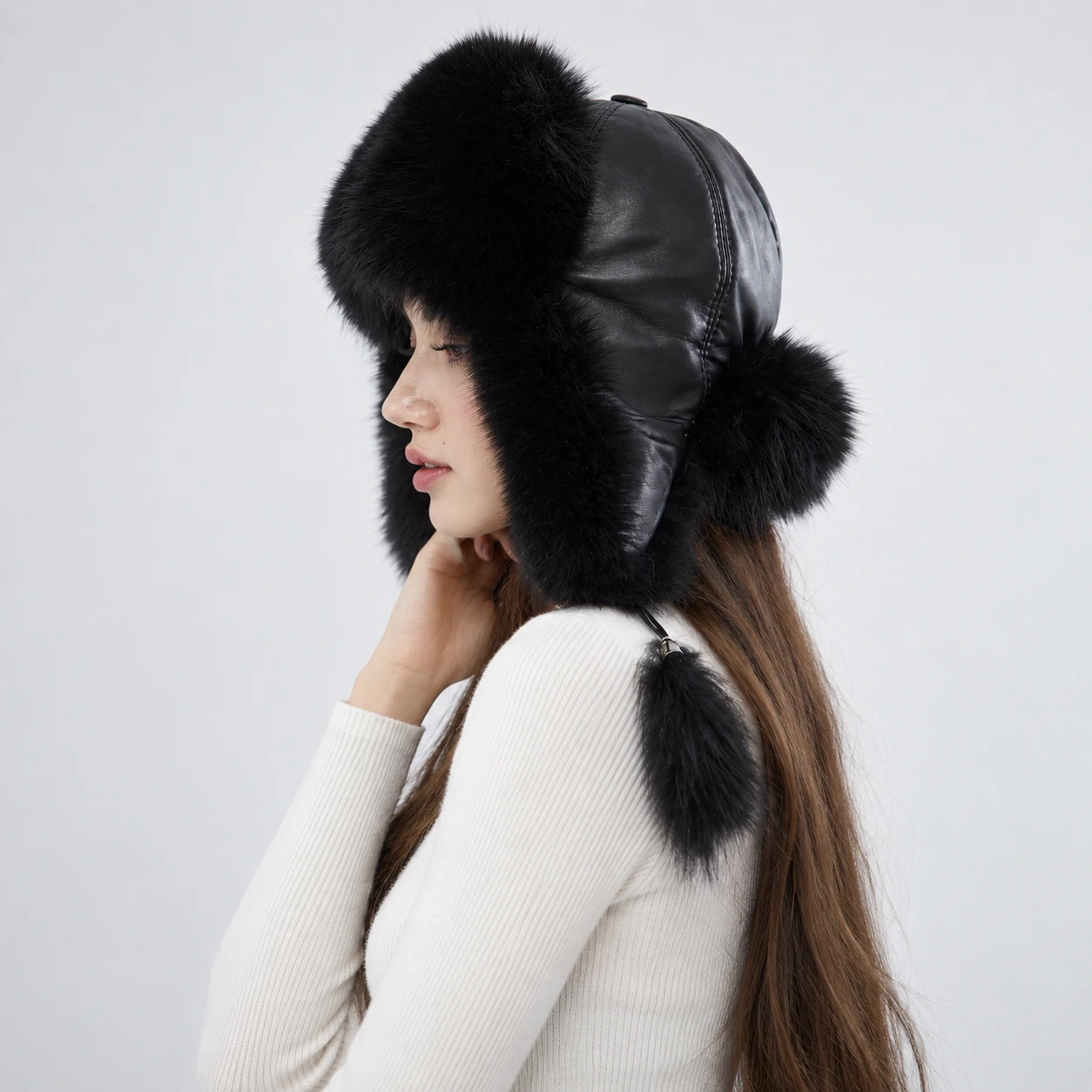
What Is a Trapper Hat?
Trapper hat is a broad English shopping term for a warm winter hat with extended ear flaps. It describes function more than one strict historic pattern.
A trapper hat may have a soft leather crown, sheepskin lining, fur or faux-fur trim, a visor, no visor, a buckle, ties or a simple strap. That flexibility is why search results for “trapper hat” often include products that could also be described as ushanka, aviator or bomber hats.
If your priority is practical winter performance, focus on how much of the ears, cheeks and back of the head the flaps actually cover. Our Trapper Hat Buying Guide goes deeper into warmth, fit, materials and buying checks.
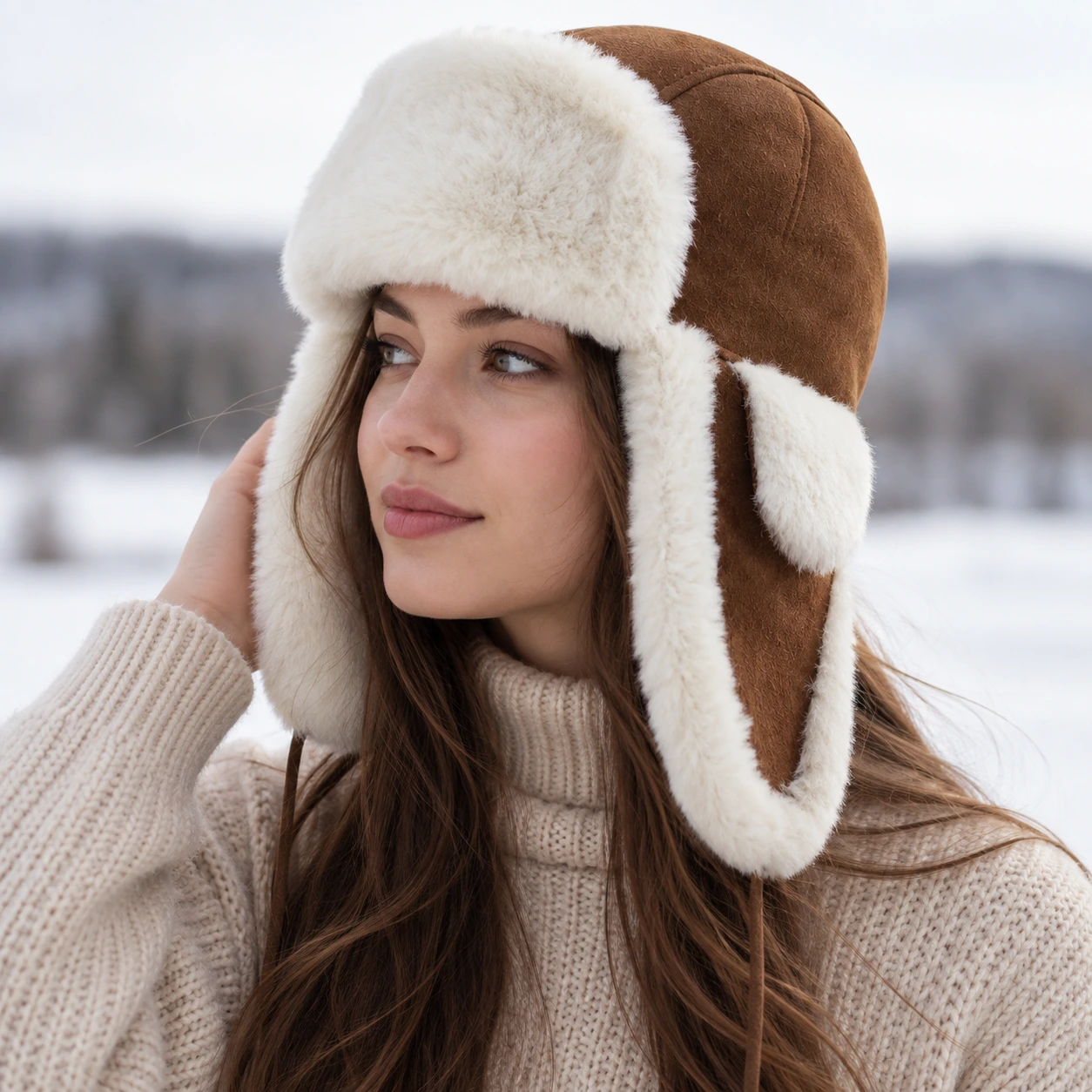
What Is an Aviator Hat?
An aviator hat usually has a more fitted, pilot-inspired silhouette. Leather is common because it gives the crown structure and helps reduce direct wind exposure, while a warm lining protects the head and ears.
The strongest visual clues are usually a closer-fitting crown, shaped ear sections and an under-chin fastening. Some aviator hats include a short visor; others do not.
This is important when shopping because “aviator” does not automatically mean “hat with visor.” In the current DeriSitesi range, for example, one pilot-style model uses a visor with functional ear flaps, while another black aviator model has functional ear flaps without a visor. The construction should always be checked at product level.
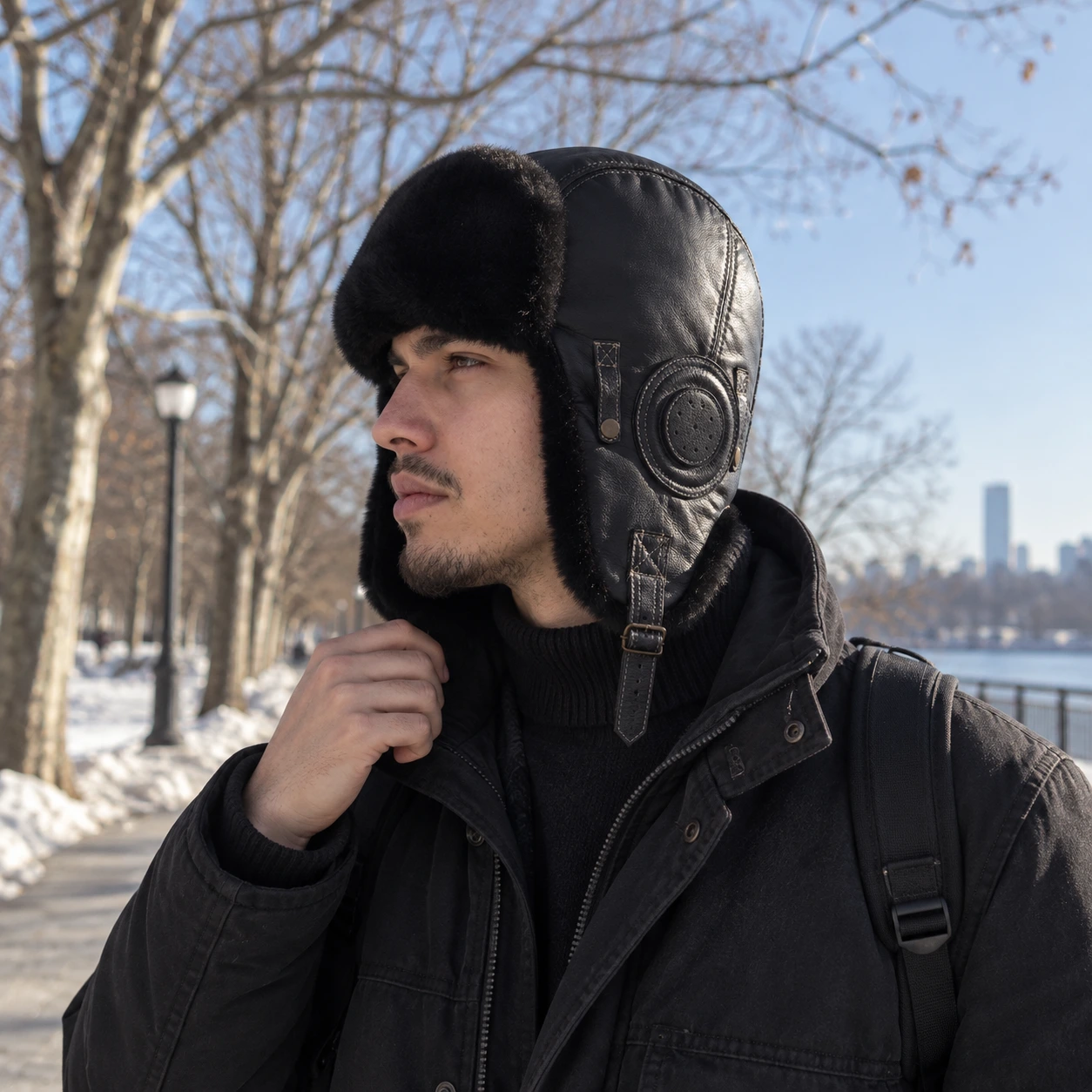
What Is a Bomber Hat?
Bomber hat is commonly used in modern retail for a pilot-style winter hat, often with leather or textile outer material and warm ear coverage. In many shops, “bomber hat” and “aviator hat” are effectively neighboring terms rather than completely separate designs.
You may see the word “bomber” used for a streamlined leather pilot hat, a shearling-lined ear-flap hat or a bulkier trapper-style design. Because the label is flexible, inspect the visor, crown shape, flap length and fastening instead of assuming a fixed pattern.
Main Difference #1: Ear Flaps and Coverage
Ear coverage is the most useful first comparison.
- Ushanka: large fold-down ear flaps are central to the design.
- Trapper: usually offers strong ear and side-head coverage, often extending lower toward the cheeks or back of the neck.
- Aviator: typically follows the head more closely, with shaped flaps that can sit closer to the jawline.
- Bomber: coverage varies because the term overlaps with several pilot and trapper constructions.
For windy weather, a flap that physically sits close to the ear is more useful than a large flap that leaves gaps because the hat is too loose.
Main Difference #2: Visor and Front Shape
A short visor is more strongly associated with some aviator or pilot-style designs, but it is not mandatory. Ushankas are generally identified by their fold-down ear structure rather than by a visor, while trapper hats may appear with or without one.
From a buying perspective, the visor changes more than appearance. It can affect how the hat sits with glasses, goggles or a hood and can change the visual balance of the face. If you plan to wear winter eyewear, look at side-view product photos rather than only a front image.
Main Difference #3: Chin Straps, Buckles and Ties
Fastening systems are another practical clue, but they do not belong exclusively to one style.
- Ties: common on classic ear-flap hats and easy to secure under the chin or above the crown.
- Buckles: often create a more structured leather aviator or ushanka look.
- Simple straps: useful for keeping the flaps close to the head in wind.
- No fastening: possible on designs where the flap shape itself provides enough coverage.
One current DeriSitesi ushanka model, for example, uses a buckle with functional ear flaps and no visor, while a Mongolian-style trapper model has functional ear flaps without a buckle or visor. These examples show why the product label alone cannot tell you every construction detail. For model-specific examples of raccoon fur, sheepskin and faux wolf-pattern construction, explore our Mongolian-style fur hat guide.
Main Difference #4: Leather, Sheepskin, Fur and Faux Fur
The same four style names can appear across very different materials. Always separate outer material, lining and trim when reading a product description.
Leather outer
Genuine lamb leather can give an aviator, ushanka or trapper hat a flexible but structured shell. Leather also helps reduce direct wind penetration compared with an open textile surface.
Sheepskin and shearling
Sheepskin combines a leather side and a natural wool side in one material. Depending on construction, it may be used as the main body, lining or visible trim. Natural wool density and curl can vary slightly from piece to piece.
Natural fur and faux fur
Both can be used for visible trim or warm interior areas depending on the model. The correct material should be stated explicitly. Do not assume “fur hat” automatically means one specific species or one specific construction.
For a broader material checklist, see our Leather Hat Buying Guide.
Which Style Is Warmest?
There is no honest universal rule that every ushanka is warmer than every trapper, aviator or bomber hat. Warmth depends on the specific construction.
Compare these factors instead:
- lining thickness and density;
- how completely the ears are covered;
- how closely the flaps sit against the head;
- outer material and wind resistance;
- neck and cheek coverage;
- overall fit.
A thick, correctly fitted aviator hat can be warmer than a loosely fitting ushanka with thinner lining. Likewise, a large trapper hat is not automatically warmer if cold air can enter around the ears.
How Should These Hats Fit?
For all four styles, the crown should feel secure without painful pressure on the forehead or temples. Ear flaps should fall naturally over the ears instead of being pulled into position by an oversized or undersized crown.
DeriSitesi adult hat sizing generally runs from XS (53–54 cm) through 3XL (65–66 cm) on suitable models. Measure around the widest part of the head, usually just above the eyebrows and ears, and compare the result with the specific product size information.
For the full cm/inch table and measurement method, use our Leather Hat Sizing Guide.
Which Style Should You Choose?
Choose an ushanka if…
You want the classic fold-down ear-flap silhouette, substantial side coverage and a traditional winter-hat look.
Choose a trapper hat if…
Your first priority is practical cold-weather coverage and you are open to different shapes, materials and fastening systems.
Choose an aviator hat if…
You prefer a closer, more structured leather look with pilot-inspired details and shaped ear coverage.
Choose a bomber hat if…
You like the pilot/bomber aesthetic but are shopping by appearance rather than a strict historical pattern. Because the term is broad, compare construction carefully.
For an ushanka vs trapper decision, do not overthink the label if two hats look almost identical. Compare the actual ear coverage, visor, fastening, lining and measurements.
What to Check Before Buying Online
- Exact head measurement: use centimeters or inches, not only S/M/L.
- Outer material: confirm whether it is leather, sheepskin, textile or another material.
- Lining: check whether it is sheepskin, textile, faux fur or another lining.
- Ear-flap length: photos with the flaps down are more useful than photos with them tied up.
- Visor: confirm whether the model actually has one.
- Fastening: ties, strap, buckle or no closure.
- Product-level photos: compare front, side and interior views.
- Return/exchange conditions: especially important for international sizing decisions.
What Buyers Notice Most
What winter-hat buyers often mention
Public DeriSitesi Etsy feedback frequently highlights craftsmanship, warmth, fit, accurate sizing and fast international delivery.
For ear-flap hats in particular, correct head measurement matters because the fit affects both comfort and how closely the flaps protect the ears.
Compare Handmade Ear-Flap Winter Hats
Explore current leather ushanka, trapper and pilot-inspired winter hats by material, lining, ear coverage and size.
FAQ
Is an ushanka the same as a trapper hat?
Not exactly. Ushanka refers to a recognizable Russian-style ear-flap hat, while “trapper hat” is a broader retail term for cold-weather hats with substantial ear coverage. Modern products can overlap in appearance.
Is an aviator hat the same as a bomber hat?
In modern retail, the terms often overlap. “Aviator” usually emphasizes the pilot-inspired shape, while “bomber hat” is frequently used for a similar winter style. Check the actual visor, ear flaps, lining and fastening rather than relying only on the name.
Do all aviator hats have a visor?
No. Some aviator hats have a short visor, while others use a smooth front with no visor. The defining retail look is usually the close-fitting pilot-style crown and ear coverage, not the visor alone.
Which is warmer: ushanka or trapper?
Neither label guarantees more warmth. Lining thickness, ear coverage, fit, outer material and weather exposure matter more than the category name.
Can a leather hat be both an ushanka and an aviator?
Yes, in retail naming a leather ear-flap hat can reasonably be described with more than one style term when its construction shares features of both. Product photos and specifications are the best way to understand what you are actually buying.
How do I choose the correct size?
Measure around the widest part of your head above the eyebrows and ears, then compare that measurement with the product size chart. Do not choose only by the size you normally wear in another brand.
[…] This guide explains what an ushanka is, what the name means, how the ear flaps work, which materials are common, how fit affects warmth and what to check before buying one. If you want a direct comparison with trapper, aviator and bomber styles, see our Ushanka vs Trapper, Aviator & Bomber Hats guide. […]
[…] you want to compare the structure of a typical ushanka, trapper, aviator and bomber hat, see our ear-flap winter-hat comparison. This article focuses instead on the materials and features of Mongolian-inspired […]