


A reliable leather glove size guide starts with one simple rule: do not choose gloves only by the S, M, L or XL label. Glove sizing can vary by pattern, leather type, lining thickness and manufacturer, so your hand measurements are a better starting point than the letter on the tag.
For most everyday and winter leather gloves, the most useful measurements are palm circumference and hand length. Measure the hand carefully, then compare those numbers with the size information on the individual product page.
This guide explains how to measure your hand, how leather gloves should fit, what changes when the gloves are lined, and what to do if your palm and finger length point to different sizes. To compare leather types, linings and construction before choosing a pair, see our Leather Gloves Buying Guide.
Table of Contents
Quick Leather Glove Sizing Checklist
- Measure the widest part of your hand around the knuckles, excluding the thumb.
- Keep the measuring tape close to the hand without squeezing it.
- Measure hand length from the tip of the middle finger to the base of the palm.
- Measure the dominant or larger hand if there is a noticeable difference.
- Compare your measurements with the specific product’s size information.
- Allow for lining thickness in winter gloves.
- Do not buy an uncomfortably tight pair expecting the leather to stretch dramatically.
Why Leather Glove Fit Matters
A leather glove should feel close to the hand without restricting normal movement. If the glove is too small, the fingers may feel compressed, the seams may be placed under unnecessary tension and the palm can feel tight when you make a fist.
If the glove is too large, extra material can bunch at the fingertips or palm and the glove may move independently from your hand. That can make everyday tasks feel less precise.
The goal is a fit that feels secure and controlled while still allowing you to open and close your hand comfortably.
How to Measure Your Hand for Leather Gloves
Use a soft measuring tape. If you do not have one, wrap a non-stretch string around your hand and measure the string against a ruler afterward.
1. Measure palm circumference
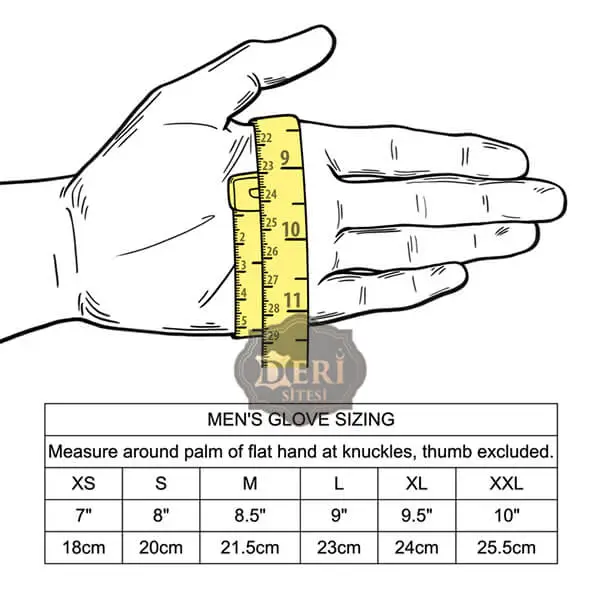
Wrap the tape around the widest part of the hand, usually across the knuckles and below the base of the fingers. Keep the thumb outside the measurement.
- Keep the hand relaxed.
- Do not pull the tape tightly into the skin.
- Keep the tape level around the hand.
- Write down the measurement in centimeters or inches.
Palm circumference is usually the first measurement to compare with a glove size chart because it describes how much room the glove needs across the main body of the hand.
2. Measure hand length
Hold the hand open and relaxed. Measure from the tip of the middle finger to the point where the palm meets the wrist.
Hand length is useful because two people can have a similar palm circumference but very different finger lengths. If a product provides both circumference and length, compare both.
3. Measure the larger hand
Many people have a small difference between their left and right hands. If one hand measures slightly larger, use the larger measurement when choosing a pair that must fit both hands.
Palm Circumference vs Hand Width: Do Not Mix Them Up
Size charts do not always use the same measurement method. Some brands use palm circumference, while others may show flat hand width or garment measurements.
| Measurement | How It Is Taken | Why It Matters |
|---|---|---|
| Palm circumference | Around the widest part of the hand, excluding the thumb | Useful for the overall glove body fit |
| Hand length | Middle fingertip to the base of the palm | Helps check whether the fingers will be too short or too long |
| Flat hand width | Across the palm while the hand lies flat | Only useful when the seller specifically asks for this measurement |
Always read the label on the size chart before comparing your number. A circumference measurement and a flat-width measurement are not interchangeable.
How Should Leather Gloves Fit?
Leather gloves are usually designed to fit closer than bulky fabric winter gloves. A good fit should follow the shape of the hand without painful pressure.
- The fingertips should reach close to the ends of the glove fingers without excessive empty space.
- The palm should lie relatively smooth rather than forming large folds.
- You should be able to make a fist comfortably.
- The thumb should move naturally without pulling strongly across the palm.
- The wrist or cuff should feel secure without cutting into the skin.
A small amount of initial firmness can be normal with some leather constructions, but the gloves should still be wearable and comfortable from the beginning.
Do Leather Gloves Stretch?
Natural leather can soften and become more flexible with use, but this should not be treated as a substitute for choosing the correct size.
How much a glove relaxes depends on the leather type, thickness, lining, pattern and how it is worn. A glove that is painfully tight, prevents normal finger movement or places obvious tension on the seams should not be purchased on the assumption that it will eventually become several sizes larger.
For more background on how natural leather can vary in feel, grain and appearance, see our Natural Leather Smell, Color & Texture Guide.
How Lining Changes Glove Size and Fit
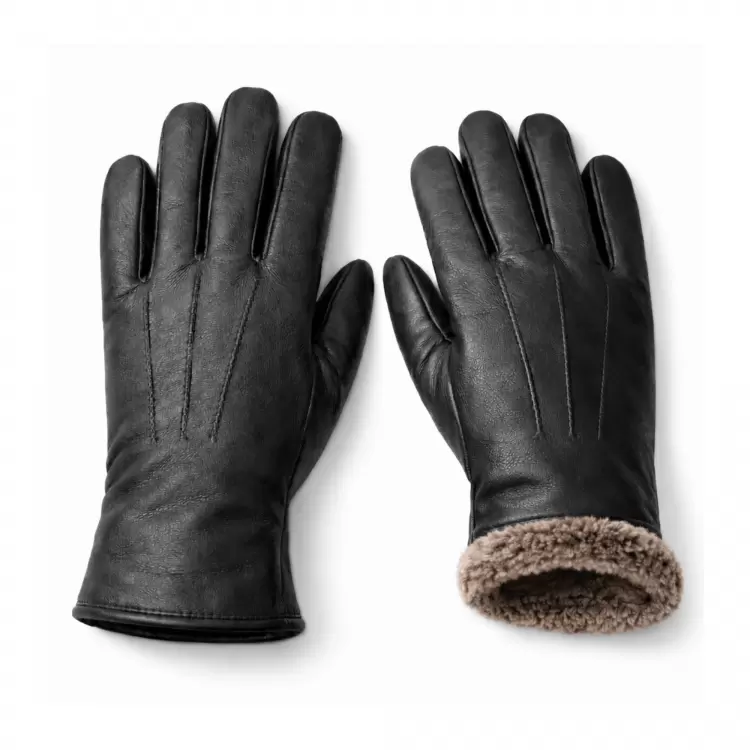
Winter gloves can feel different from unlined gloves even when the outer pattern uses the same size label. The lining occupies space inside the glove, and thicker linings can make the fit feel closer.
This is why the size information for the exact model matters. A lightly lined glove, a Miflon-lined glove and a thick shearling-lined glove may not feel identical on the hand.
Do not automatically size up without checking the product description. Well-designed winter gloves should already account for the intended lining in their pattern.
What If You Are Between Two Sizes?
If your measurement falls between two sizes, look at the construction and intended fit before deciding.
- For a close everyday fit: the smaller option may work if your measurements are genuinely within the product’s range and the glove is not restrictive.
- For thick winter lining: the larger option may be more comfortable if the chart or seller recommends extra room.
- For long fingers: check hand length instead of using palm circumference alone.
- For a wide palm: prioritize a comfortable palm fit and confirm whether the fingers will still sit correctly.
When the two measurements point to different sizes, the safest option is to compare the product-specific chart or ask the seller which measurement is more important for that particular pattern.
Long Fingers, Wide Palms and Different Hand Shapes
Two hands with the same circumference do not always have the same proportions. Some people have long fingers and a narrow palm; others have shorter fingers and a wider palm.
For this reason, a single size label cannot describe every hand perfectly. If your hand shape is outside the average proportions, send both palm circumference and hand length when asking for sizing advice.
Should Men and Women Use Different Measurement Methods?
The measurement method itself is the same. Measure the actual hand and compare it with the size chart for the glove you want to buy.
Men’s, women’s and unisex glove patterns can differ in finger proportions, palm shape and styling, so the product-specific chart remains more important than assuming that the same letter size will fit the same way across every design.
How to Choose a Leather Glove Size Online
- Choose the exact glove model you want.
- Check which sizes are available for that model.
- Read the product’s measurement method before measuring.
- Measure palm circumference and hand length.
- Compare both measurements with the product information.
- Check whether the glove is lined and what type of lining it uses.
- If you fall between sizes, ask which measurement should take priority for that model.
You can compare current sizes, leather types and lining options in our handmade leather gloves collection.
What DeriSitesi buyers often mention
Public DeriSitesi Etsy reviews can provide additional real-world context on leather quality, craftsmanship, fit and the ordering experience.
For glove sizing, always use your actual hand measurements and the product-specific size information first; reviews are useful supporting context rather than a substitute for measuring.
Common Leather Glove Sizing Mistakes
- Choosing only by your usual S, M, L or XL clothing size.
- Confusing palm circumference with flat hand width.
- Pulling the measuring tape too tightly.
- Ignoring finger length.
- Assuming every manufacturer’s size chart is identical.
- Automatically sizing up because the glove has a lining.
- Buying a painfully tight glove and expecting dramatic stretching.
- Using a fashion-glove sizing guide for technical protective gloves that have their own fit and safety requirements.
Leather Glove Size Guide FAQ
Where should I measure my hand for gloves?
Measure around the widest part of the hand, normally across the knuckles, while keeping the thumb outside the tape.
Should I measure in centimeters or inches?
Use whichever unit the product chart provides. If necessary, 1 inch equals 2.54 centimeters.
Which hand should I measure?
If your hands differ slightly, use the larger hand so the pair is not too tight on that side.
Should leather gloves be tight at first?
They can feel close or slightly firm depending on the leather and construction, but they should not cause painful pressure or prevent normal movement.
Do lined leather gloves need a larger size?
Not automatically. The pattern may already account for the lining. Use the size information for the exact lined model rather than applying a general “size up” rule.
What if my palm circumference and hand length suggest different sizes?
Check the product’s fit notes and ask the seller which measurement is more important for that specific pattern. Providing both measurements is more useful than relying on the size letter alone.
Compare Handmade Leather Gloves
Check current leather types, lining options and available sizes, then compare the product-specific fit information before ordering.
[…] shows how to read a product specification before ordering. For exact hand measurements, use our Leather Glove Size Guide; for cleaning or drying, visit How to Clean Leather […]