


How to clean leather gloves safely depends on the leather, lining and type of dirt you are dealing with. A light surface mark, road salt, sweat buildup and a soaked winter glove should not all be treated the same way.
The safest approach is to start gently: remove dry surface dirt first, use as little moisture as possible, avoid household chemicals, and let leather dry naturally away from direct heat. For lined or shearling gloves, the inside of the glove may need different care from the outer leather.
This guide covers routine cleaning, spot cleaning, drying, conditioning and off-season storage for everyday leather gloves. It is intended for fashion and winter gloves, not specialist protective equipment with its own manufacturer care instructions.
Table of Contents
Quick Leather Glove Care Checklist
- Check the material first. Smooth lambskin, goatskin, cowhide and shearling-lined gloves can need different care.
- Remove dry dirt before adding moisture.
- Use a soft cloth and minimal water for routine cleaning.
- Avoid soaking the gloves.
- Never dry leather on a radiator or with a hair dryer.
- Test any cleaner or conditioner on a hidden area first.
- Store gloves only when completely dry.
- Follow the individual product’s care label when it gives more specific instructions.
Identify the Leather and Lining First
Before cleaning, check the product description and care label. Two black leather gloves can look similar while using different leather finishes or linings. If you are still choosing a pair, our guide to leather glove materials and linings explains what to compare before buying.
| Construction | Main Care Concern | What to Avoid |
|---|---|---|
| Smooth leather | Surface dirt, finish compatibility and drying | Soaking, alcohol, bleach and direct heat |
| Suede or nubuck | Preserving the raised surface texture | Products intended only for smooth leather |
| Textile-lined leather gloves | Moisture and sweat inside the glove | Pouring liquid cleaner directly inside |
| Shearling-lined gloves | Outer leather and natural wool need gentle handling | Heavy wetting and aggressive brushing while damp |
If the leather type is unclear, begin with dry cleaning only and avoid applying a treatment until you know what the surface is. Our Natural Leather Smell, Color & Texture Guide explains which variations in grain, tone and smell can be normal in genuine leather.
How to Clean Leather Gloves Safely
For ordinary dust and light marks, the least aggressive method is usually the best.
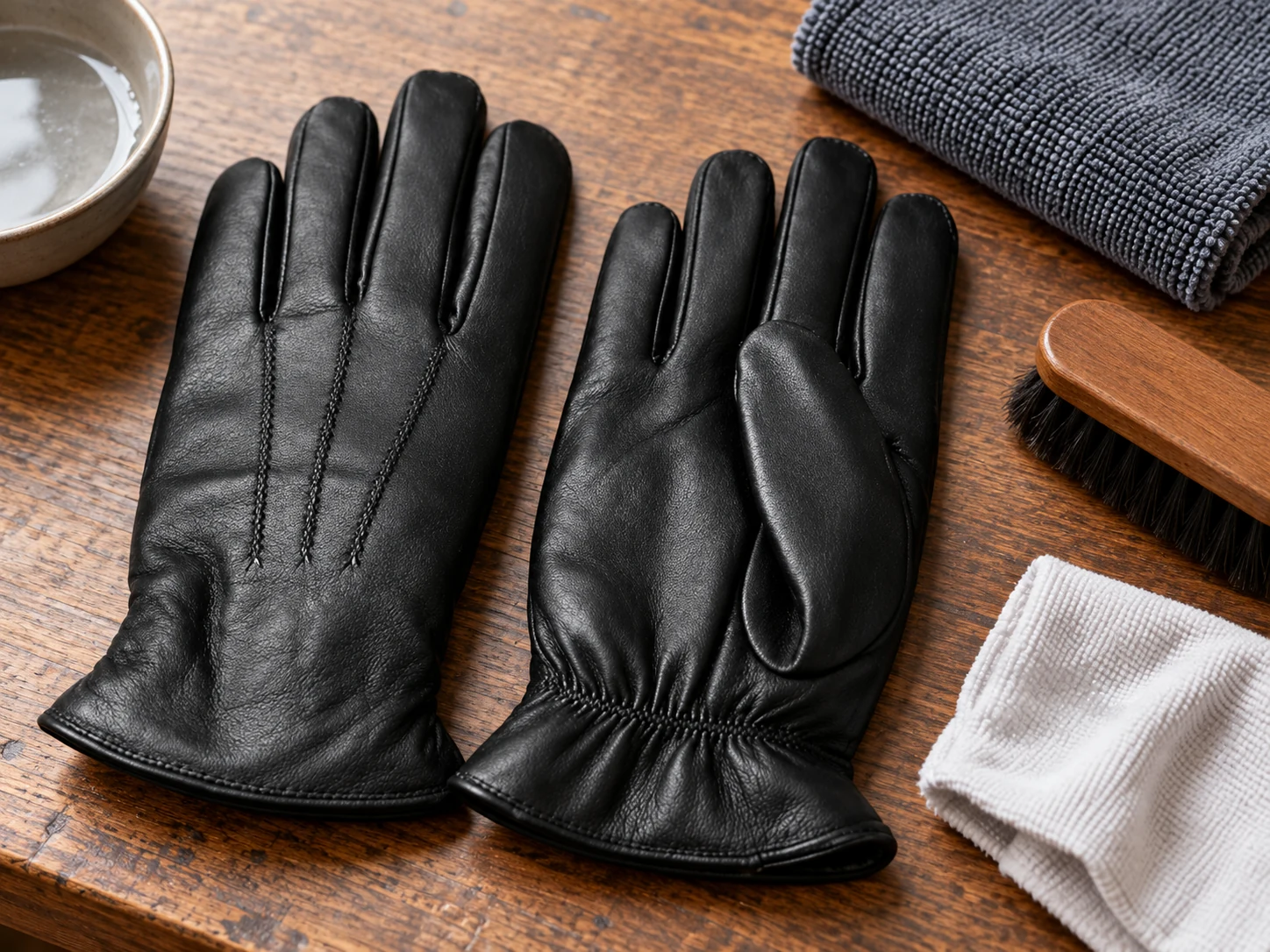
- Let any wet mud or moisture dry naturally first.
- Remove loose dirt with a clean, soft cloth.
- If needed, use a second cloth that is only slightly damp.
- Wipe the leather gently instead of scrubbing one small area.
- Let the gloves air dry completely before storing or treating them further.
Do not automatically reach for strong soap, disinfectant, alcohol wipes or household stain removers. They may affect dye, finish or flexibility, especially on soft lambskin and other lightly finished leathers.
How to Spot Clean Leather Gloves
If a small stain remains after dry wiping, use a cleaner specifically intended for the leather type and follow its instructions. Test it first on an inconspicuous area such as the inside edge of the cuff.
Work gradually. It is usually safer to repeat a gentle treatment than to saturate one spot in a single attempt. After spot cleaning, allow the glove to dry naturally and check whether the color and surface have changed before applying anything else.
For oil, ink, paint, strong dye transfer or an unknown chemical stain, home treatment can make the mark larger or harder to remove. Those cases are better assessed before using an aggressive product.
How to Clean the Inside and Lining
The inside of a glove can collect more moisture than the outside because of sweat and body heat. The correct method depends on the lining.
Textile lining
Let the glove air out after use. If the manufacturer allows internal spot cleaning, use minimal moisture and avoid soaking the lining through to the leather shell.
Shearling or natural wool lining
Natural wool should be handled gently. Do not pour water or detergent into the glove. If the lining is only slightly damp from normal wear, open the cuff and allow airflow at room temperature.
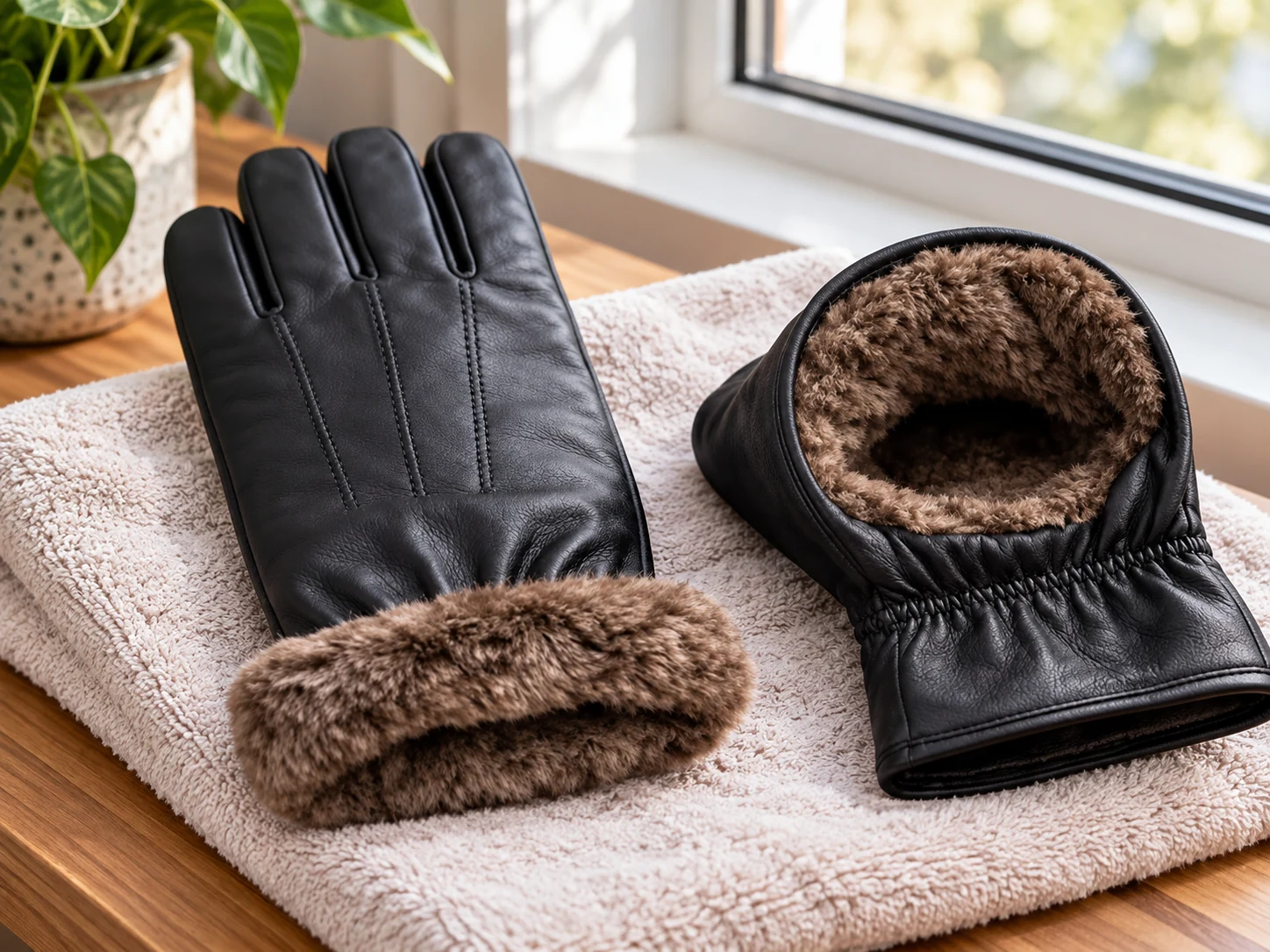
For heavy contamination or persistent odor in a shearling-lined glove, professional cleaning may be safer than experimenting with household products.
What to Do If Leather Gloves Get Wet
Rain or snow does not automatically ruin leather gloves, but forced drying can cause problems.
- Blot excess water gently with a clean towel.
- Do not wring or twist the gloves.
- Shape them lightly with your hands.
- Leave them to dry at room temperature with airflow around the cuff.
- Keep them away from radiators, heaters, direct flames and hair dryers.
Do not store damp gloves in a sealed plastic bag. Trapped moisture can create odor and can also encourage mold growth during longer storage.
Should You Condition Leather Gloves?
Conditioner can be useful when a compatible smooth leather feels dry, but more product is not automatically better. Some finishes need little treatment, and over-conditioning can darken the leather, leave residue or change the feel.
Before using a conditioner:
- confirm that it is suitable for the glove’s leather type;
- test a very small hidden area;
- apply a thin amount rather than saturating the leather;
- allow the product to absorb according to its instructions;
- and avoid applying smooth-leather conditioner to suede or nubuck unless the product specifically says it is suitable.
How to Handle Odor and Sweat
For ordinary post-wear odor, start with ventilation rather than perfume or deodorizing spray. Open the cuffs and let the gloves dry completely in a shaded, ventilated area.
If odor remains, identify whether it comes from normal wear, a damp lining or possible mold. Strong fragrances can temporarily mask a smell without solving the moisture problem and may leave residue on the lining.
Persistent musty odor, visible mold or repeated dampness deserves more careful attention because the problem may be deeper than the surface.
How to Store Leather Gloves
Store gloves clean and completely dry. Keep the pair flat or gently shaped rather than tightly folded under heavy objects.
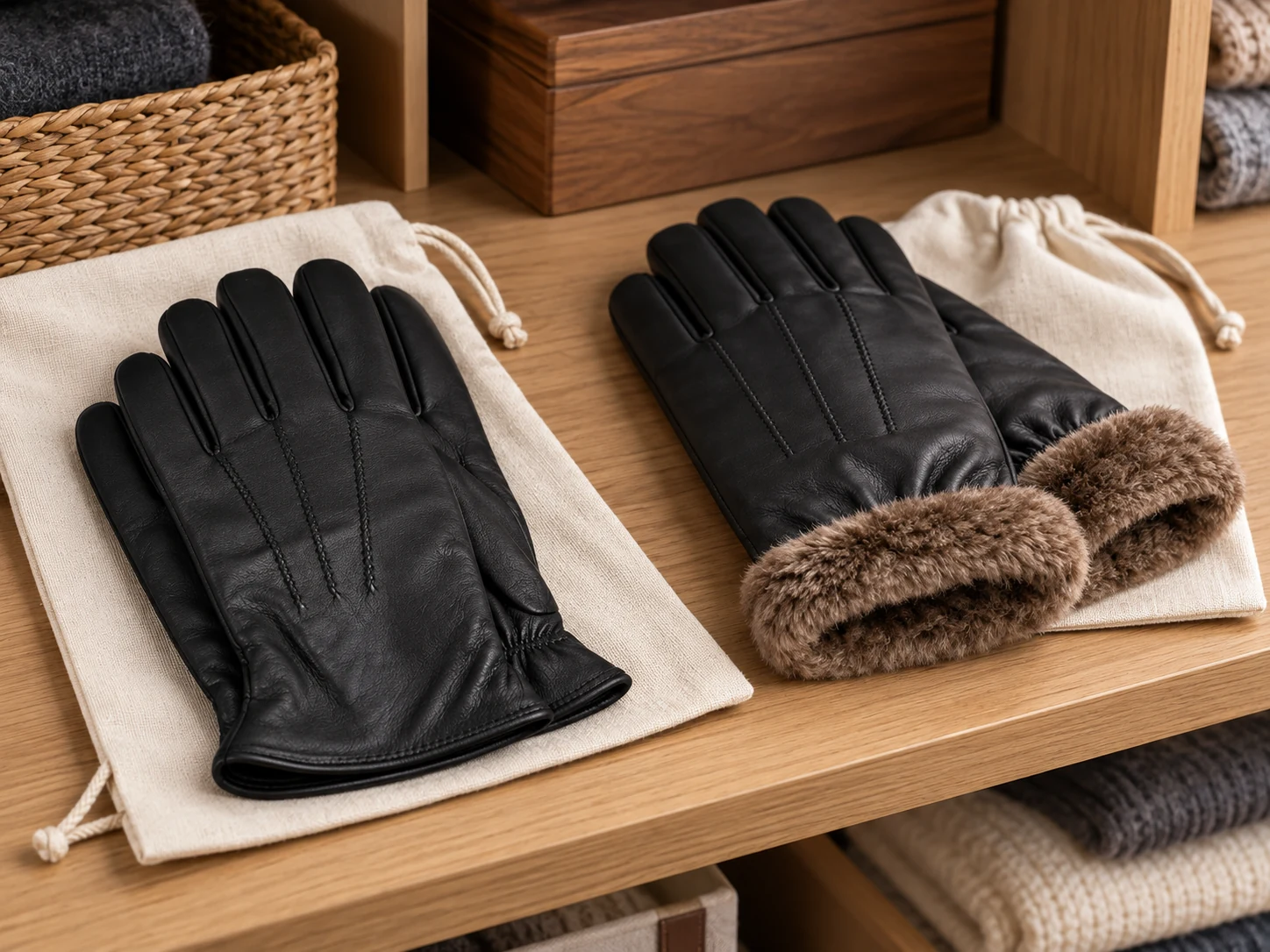
- Choose a cool, dry place away from prolonged direct sunlight.
- Avoid long-term storage next to radiators or other heat sources.
- Do not compress the gloves under heavy clothing.
- Use breathable storage rather than sealing damp or recently worn gloves in plastic.
- Keep light-colored leather away from materials that may transfer dye during long storage.
If fit is also a concern before buying your next pair, our Leather Glove Size Guide explains palm circumference, hand length and how lining affects fit.
Leather Glove Care Mistakes to Avoid
- Machine washing leather gloves without explicit manufacturer approval.
- Soaking the entire glove for a small surface mark.
- Using alcohol, bleach, acetone or harsh household cleaner.
- Drying wet gloves on a radiator or with a hair dryer.
- Scrubbing one spot aggressively.
- Applying conditioner before identifying the leather type.
- Using smooth-leather cream on suede or nubuck without checking compatibility.
- Storing gloves while the lining is still damp.
- Assuming every natural leather reacts the same way to a cleaning product.
When to Use Professional Cleaning
Professional leather cleaning is worth considering when the gloves have a large stain, visible mold, heavy oil contamination, severe dye transfer, an expensive or delicate finish, or a natural wool lining that needs more than routine airing.
It is also the safer option when you do not know what caused the stain or when the care label specifically recommends specialist cleaning.
What DeriSitesi buyers often mention
Public DeriSitesi Etsy reviews offer additional real-world context on leather feel, craftsmanship, fit and the ordering experience.
For care decisions, the material and care instructions of the exact glove should come first; reviews are useful supporting context rather than a substitute for product-specific care.
Leather Glove Care FAQ
Can leather gloves be washed with water?
For routine care, avoid soaking them. Use the least moisture necessary and follow the care instructions for the specific leather and lining.
Can I use hand soap on leather gloves?
Do not assume ordinary hand soap is suitable for finished leather. A leather-specific cleaner matched to the material is safer when dry wiping is not enough.
How do I dry wet leather gloves?
Blot excess water, reshape the gloves gently and let them dry naturally at room temperature. Keep them away from direct heat.
Can I use a hair dryer on leather gloves?
It is better to avoid forced hot air. Rapid heat can dry the leather unevenly and may affect flexibility or shape.
How often should leather gloves be conditioned?
There is no universal schedule. Condition only when appropriate for the specific leather and according to the product instructions rather than applying treatment automatically after every use.
How should I store leather gloves over summer?
Store them clean, fully dry and uncompressed in a cool, ventilated place away from prolonged sunlight and direct heat.
Browse Handmade Leather Gloves
Compare current leather types, linings, colors and available sizes before choosing your next pair.