


Buying leather gloves is easier when you compare the details that change how a pair actually feels: the leather, the lining, finger shape, cuff, stitching and the weather or activity you have in mind. Two black pairs may look nearly identical online but fit and perform differently.
This leather gloves buying guide focuses on choosing everyday and winter gloves, not simply picking the softest-looking leather or the thickest lining. It also shows how to read a product specification before ordering. For exact hand measurements, use our Leather Glove Size Guide; for cleaning or drying, visit How to Clean Leather Gloves.
Table of Contents
- Quick Buying Checklist
- Choose by Use, Not by Looks Alone
- Lambskin, Goatskin, Sheepskin and Cowhide
- Which Glove Lining Should You Choose?
- Fit and Finger Shape
- How to Judge Construction and Quality
- Warmth, Wind and Moisture
- Real Glove Construction Examples
- What to Check When Ordering Online
- Buying Mistakes to Avoid
- Leather Gloves Buying FAQ
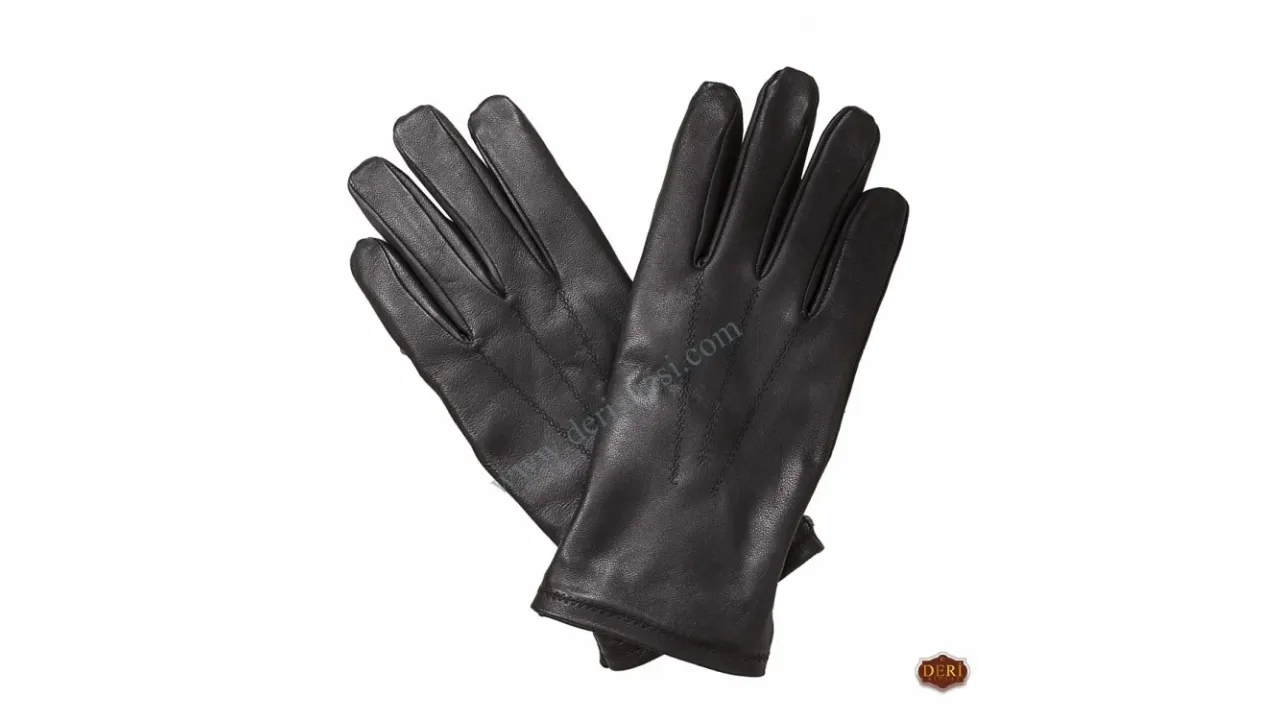
Quick Checklist Before You Buy Leather Gloves
- Purpose: everyday commuting, dress wear, cold-weather walking, riding or a specialist activity?
- Outer material: genuine lambskin, goatskin, sheepskin or another clearly identified leather?
- Lining: unlined, textile, Miflon, Lycra-based or natural shearling? Check the exact model.
- Fit: room for finger movement, a secure palm and a cuff that works with your coat.
- Build: neat seams, sensible panel placement, comfortable thumb movement and fastening details.
- Product evidence: front, palm, cuff and lining photographs rather than a single front view.
- Ordering: model-specific sizing, available color/size, material description, shipping and return conditions.
Start with the activity and season. A soft, low-bulk dress glove and a bulky insulated winter glove solve different problems, even when both are made from genuine leather.
Choose Leather Gloves by Use, Not Looks Alone
Everyday city wear
For short walks, commuting and daily errands, consider supple leather, a comfortable finger pattern and a lining suited to your local weather. Very thick insulation may feel unnecessary if you spend much of the day indoors or use your hands frequently.
Cold-weather walking
Prioritize complete finger and wrist coverage, insulation and how the glove closes against the sleeve. A warm lining can reduce cold exposure, but too-tight fingers or an open cuff can make a glove feel less comfortable in wind.
Dress and smart-casual wear
A close, tidy profile and smooth leather often matter more than maximum bulk. Assess how the wrist finishes with a coat and whether the glove allows normal movement without a tight palm.
Driving, motorcycle riding and specialist activities
Everyday fashion gloves are not automatically protective riding gloves. If you need motorcycle or work protection, check the exact product’s independently documented safety rating, protective components and intended purpose. Do not treat ordinary fashion or winter gloves as certified impact- or abrasion-protection equipment without evidence.
Lambskin, Goatskin, Sheepskin and Cowhide: What’s the Difference?
“Genuine leather” confirms very little about how a glove will feel. Species, hide thickness, finishing and construction all matter. One type is not automatically superior for every use.
| Leather | Typical feel or strength | Buyer’s main check |
|---|---|---|
| Lambskin | Often fine-grained, soft and flexible in lighter glove patterns | Thickness, finish and lining |
| Goatskin | Often supple with a more pronounced natural grain | Panel quality and any synthetic details |
| Sheepskin / shearling | May combine the hide and its wool for insulation | Whether the wool is attached natural shearling or a separate lining |
| Cowhide | Can be firmer or heavier depending on thickness and finish | Flexibility, intended use and any verified protective rating |
Leather finish also matters. A strongly coated leather may look more uniform than minimally finished leather; neither appearance by itself proves authenticity or overall quality. Our Natural Leather Smell, Color & Texture Guide explains normal material variation in more depth.
Which Leather Glove Lining Should You Choose?
The lining can change warmth, bulk, comfort and how the glove fits. It should be checked separately from the outer leather: a genuine leather shell does not tell you what is against your skin.
Unlined or lightly lined
Usually the least bulky choice for moderate conditions or a closer dress fit. It may allow more precise movement, but will not generally offer the insulation of a winter lining.
Textile, Lycra-based and Miflon linings
Fabric linings differ in feel, thickness and warmth. Lycra is an elastic-fiber trade name rather than a universal warmth grade; Miflon is a lining term used on specific models. Read the product description instead of treating either label as a fixed cold-temperature rating.
Natural shearling
Real shearling or lamb wool lining creates a fuller winter construction and may take more space inside the fingers and palm. If you want maximum finger dexterity, check whether the volume is comfortable before choosing the warmest-looking option.
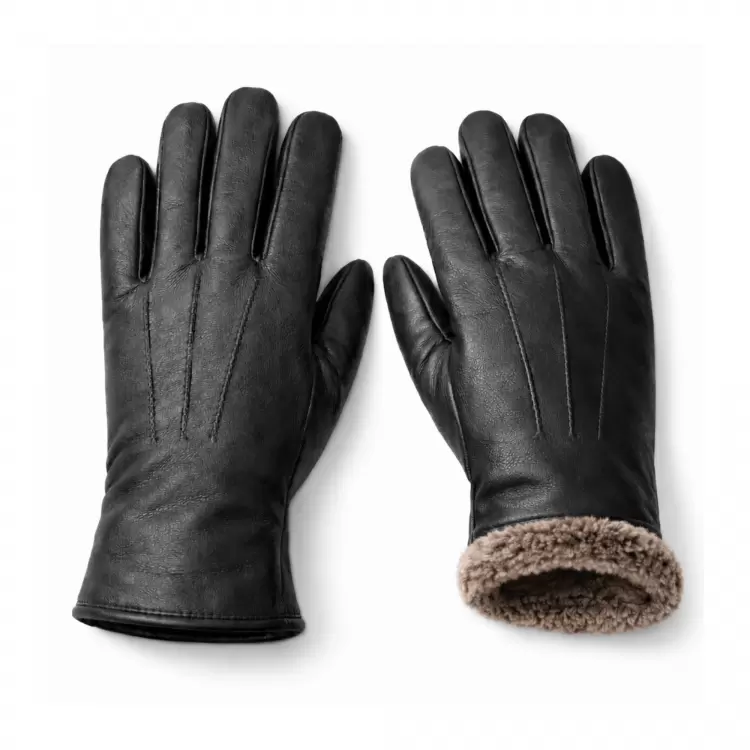
Avoid a blanket “size up for winter lining” rule: a correctly designed lined glove should account for its lining. Use the model’s size chart and fit notes before changing size.
How Should Leather Gloves Fit?
With your fingers relaxed, the glove should stay close enough not to bunch up, while still allowing you to open your hand, grip lightly and make a fist. The fingertips should not be painfully compressed or left with large empty folds.
- Palm: comfortably secure with no strong pulling across the knuckles.
- Fingers: length appropriate to your hand; long-finger and wide-palm combinations may need special attention.
- Thumb: moves freely without dragging the palm or cuff.
- Wrist: stays in place and fits with a coat sleeve.
Measure palm circumference and hand length, then compare them with the size information for the chosen product. If you are between sizes, don’t rely on leather stretching dramatically. The full measuring steps and fit scenarios are in our Leather Glove Size Guide.
How to Judge Leather Glove Construction and Quality
Stitching and seams
Look for even stitching and a seam layout that does not press awkwardly into the fingers or between the thumb and palm. Small decorative stitch differences can be normal, but pulled stitches and gaps are not desirable in a new pair.
Finger and thumb pattern
Notice whether the fingertips are shaped naturally and whether the thumb sits at a comfortable angle. A handsome glove with a poor thumb pattern may still feel tiring in use.
Cuff and fastening
Check length, elasticity and whether the wrist has a snap, button, buckle or strap. A cuff that disappears under a sleeve may be suitable for a neat city look, while a fuller cuff can provide more winter coverage.
Mixed-material details
Some gloves combine genuine leather body panels with synthetic wrist details or a separate lining. That is not automatically a defect; the issue is whether the product description accurately distinguishes those materials.
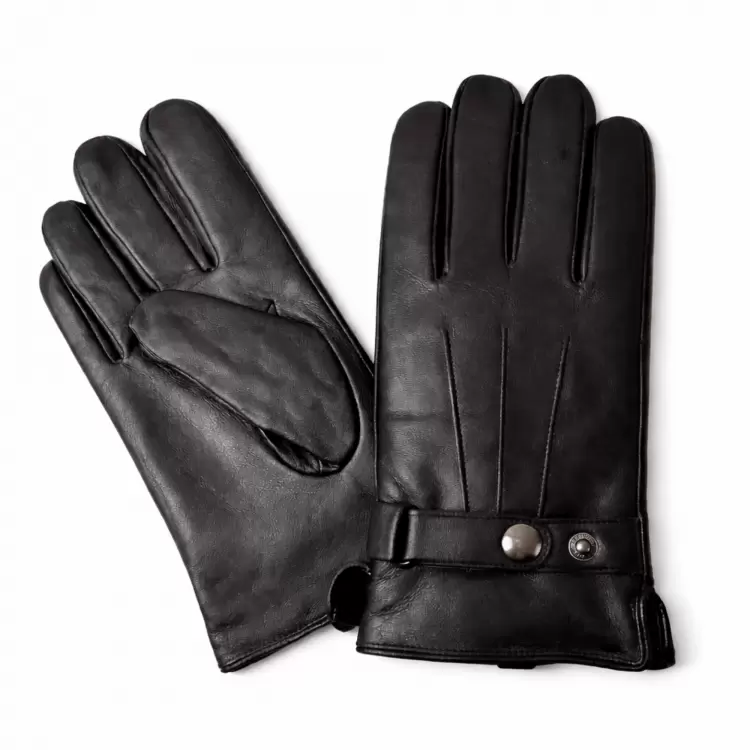
Also ask for palm and inner-lining photos. A single front product image does not show the stitching, grip surface or true insulation.
Are Leather Gloves Warm Enough for Winter?
Warmth depends on lining, wind exposure, cuff coverage, fit and activity—not leather alone. Leather can reduce direct wind exposure, while the lining helps insulate the hand. But a glove that squeezes the fingertips or leaves a large wrist gap may perform less comfortably than expected.
No ordinary leather glove has one reliable temperature rating for every buyer. Cold tolerance, weather, wind, rain or snow and how long you remain outside all change the experience. Genuine leather is also not automatically waterproof. For wet-weather use, look for an explicitly rated construction if waterproof performance is essential.
For specific winter use, compare the lining against the actual climate and activity rather than choosing solely by appearance.
Real DeriSitesi Glove Construction Examples
Rather than claiming that every glove in the collection has the same materials, these examples show why the exact listing matters:
- Goatskin with Miflon lining (EL09): a genuine goatskin body with a warm Miflon lining. The decorative wrist strap contains a synthetic detail, so it should not be described as an all-leather construction.
- Lamb leather with fabric/Lycra inner construction (EL002): a lighter-feeling alternative to a full natural-wool lining, suited to comparing fabric-lined winter gloves.
- Lambskin with real shearling (EL10): genuine lambskin outside and natural wool lining inside. Because these are natural materials, the lining color can vary by production batch; refer to the exact listing if a shade matters to you.
These are examples of construction, not a universal recommendation for every climate or hand shape. Product options, available sizes and materials should be confirmed on the current listing.
What to Check When Buying Leather Gloves Online
- Read the complete material description: identify the leather, interior lining and non-leather parts independently.
- Look beyond the hero photo: front, back, palm, cuff and lining images are useful for judging shape and construction.
- Check both hand measurements: a simple S–XL chart is not enough if your palm and finger proportions differ.
- Think about where you will wear them: daily city wear and long outdoor winter use need different features.
- Check available options: size, color and stock are product-specific and can change.
- Review the return and shipping terms: check the current policy and any custom-order restrictions before paying.
- Ask about uncertainty: if a lining or cuff detail matters, ask for confirmation for that model instead of assuming from another glove.
DeriSitesi: handmade in Istanbul
Compare specifications for the exact leather glove model and read independent feedback before ordering. Reviews provide useful context for craftsmanship and customer experience, but are not a substitute for size and material details.
Explore Handmade Leather Gloves
Compare real glove models by leather type, lining, cuff design, fit and available size.
Common Mistakes When Choosing Leather Gloves
- Assuming every “genuine leather” glove uses the same hide or lining.
- Choosing the thickest wool-lined pair without considering dexterity or the intended activity.
- Buying by letter size alone instead of comparing hand measurements.
- Ignoring the palm, thumb and cuff while focusing on the appearance of the back of the glove.
- Assuming gloves will stretch several sizes with wear.
- Assuming leather is fully waterproof or an everyday pair is certified for motorcycle protection.
- Comparing prices without checking differences in material, lining and construction.
After purchase, follow the product’s own instructions for care. Our Leather Glove Cleaning, Drying & Storage Guide covers this separately so the buying guide stays focused on selecting the right pair.
Leather Gloves Buying FAQ
What leather is best for everyday gloves?
There is no single best leather for everyone. Soft lambskin may appeal when flexibility and a refined feel matter, while goatskin can work well in a flexible everyday design. Compare the actual thickness, finish, pattern and lining.
Are lambskin gloves warmer than goatskin gloves?
Not by species alone. Lining, fit, cuff coverage and weather conditions often matter more than whether the outer hide is lambskin or goatskin.
Are shearling-lined gloves worth choosing for winter?
They can be useful if you spend more time in cold weather, but natural wool takes space inside the glove. Check the model’s fit, dexterity and lining details first.
Should leather gloves fit tightly when new?
They should fit closely without painful pressure, pinched fingertips or restricted movement. Do not count on dramatic stretching to correct an unsuitable size.
How do I choose the right leather glove size online?
Compare measured palm circumference and hand length against the individual glove size guidance rather than relying only on your usual clothing size.
Can I use everyday leather gloves for motorcycle protection?
Do not assume so. Choose equipment with product-specific protective features and verifiable ratings appropriate to the riding or work activity.
Can leather gloves be washed or dried on a radiator?
Ordinary leather fashion gloves should not be machine-washed or dried with direct heat. Follow the model-specific care label and read our care guide before cleaning.
[…] This guide explains how to measure your hand, how leather gloves should fit, what changes when the gloves are lined, and what to do if your palm and finger length point to different sizes. To compare leather types, linings and construction before choosing a pair, see our Leather Gloves Buying Guide. […]
[…] For product-specific buying checks, see our Leather Hat Buying Guide or, for lambskin, goatskin and lining choices, the Leather Gloves Buying Guide. […]