


A papakha is a traditional wool or sheepskin hat closely associated with the Caucasus. Usually tall, round and brimless, it is designed to surround the head with a substantial layer of natural wool or fur.
Although the word papakha is often used loosely online for several traditional winter hats, not every tall fur hat, kalpak or ushanka is the same thing. Shape, material, regional tradition and construction all matter.
If you are considering a papakha hat for men, this guide explains what a papakha is, where the style comes from, how different versions are constructed, how it should fit and what to check before buying one.
Table of Contents
What Is a Papakha?
The papakha is a traditional men’s head covering worn in different parts of the Caucasus. Historical and regional examples vary, but one of its most recognizable forms is a tall, cylindrical or slightly rounded hat made from sheepskin.
Karakul sheepskin has also historically been associated with some papakha styles. The distinctive tightly curled surface of karakul gives these hats a different appearance from longer-haired sheepskin versions. You can find a general historical overview in the Papakha reference article.
The basic idea is simple: a brimless hat with substantial natural insulation around the head. But within that description, height, shape, wool texture and construction can differ considerably.
That is why two products both described online as a “papakha hat” may look quite different.
Papak, Papakha and Papaq: Why Are There Different Names?
You may encounter several spellings:
- Papakha
- Papak
- Papakh
- Papaq
- Papakhi
These forms reflect different languages and transliterations used across the Caucasus and neighboring regions.
There is also overlap between terms such as papakha and kalpak in historical and commercial usage. Research on traditional headwear terminology also shows that names for leather, fur and fabric hats have overlapped across Caucasian, Turkic and neighboring cultures. See this academic discussion of kalpak terminology and cultural context.
For a buyer, the safest approach is therefore not to judge a hat only by its name. Look at:
- the silhouette;
- the height;
- the exterior material;
- the wool or fur texture;
- whether it has ear flaps;
- the interior construction;
- and the exact product description.
This is more useful than assuming every seller uses historical terminology in exactly the same way.
Where Does the Papakha Come From?
The papakha is most strongly associated with the Caucasus, where similar forms have been worn among different communities and regions.
It became particularly recognizable as part of traditional male dress, while versions of the hat also appeared in military dress beyond purely civilian use. Historical descriptions show both fully fur-covered papakhas and versions combining a textile crown with a sheepskin or fur border.
Today, the papakha is worn for several reasons. For some people it represents cultural or regional heritage. For others it is a practical winter hat. And for international buyers, its distinctive silhouette makes it an alternative to an ordinary winter cap.
A well-made papakha can therefore be both traditional in inspiration and completely usable as modern cold-weather headwear.
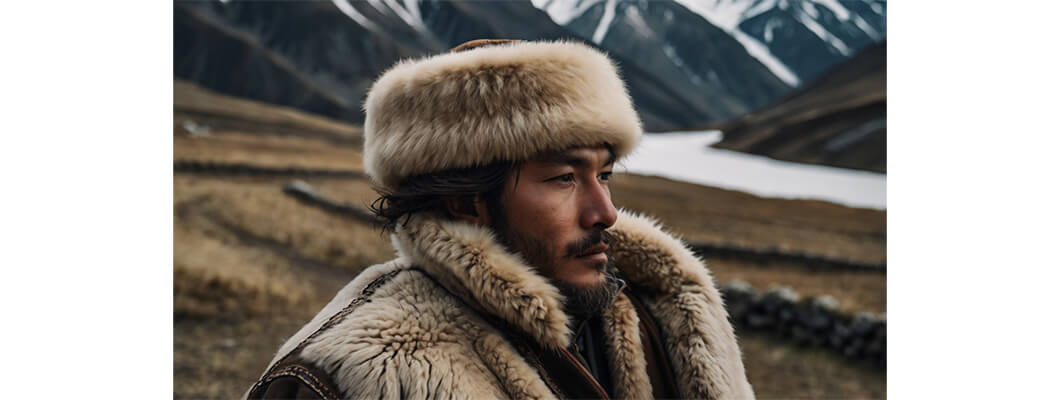
Main Papakha Shapes and Styles
There is no single universal papakha shape. However, several characteristics appear repeatedly.
Tall cylindrical papakha
This is probably the silhouette most people imagine when they hear the word papakha. It rises noticeably above the crown of the head and has a relatively straight-sided profile.
The height gives it a strong visual presence, while the surrounding wool provides insulation.
Shorter papakha styles
Some traditional hats have a lower and more compact profile. The shorter kubanka, for example, is related in appearance but sits much closer to the head than a tall papakha.
For everyday wear, some buyers prefer a lower profile because it feels less dramatic while retaining the general traditional character.
Full-wool or curly-wool appearance
A papakha can look very different depending on the sheep breed and the wool structure.
Longer or fuller wool creates a softer, more voluminous silhouette. Karakul, by contrast, is known for a closer and more tightly curled appearance.
Neither appearance should automatically be considered “better.” They represent different materials, traditions and visual styles.
What Materials Are Papakha Hats Made From?
Material is one of the most important things to check before buying.
Sheepskin
Sheepskin is strongly associated with traditional papakha construction.
In a natural sheepskin product, the leather and wool belong to the same hide. This is different from making a leather shell and attaching an unrelated synthetic lining.
Natural wool traps air between its fibers, helping insulate the head while retaining a characteristic texture.
Because it is a natural material, two pieces of sheepskin will not always have perfectly identical curl, density or tone. That variation is normal.
Karakul
Karakul is a type of sheep associated with a distinctive curled fleece.
The terms karakul, astrakhan and Persian lamb can sometimes appear close together in commercial descriptions, but sellers do not always use them consistently.
For this reason, a product described as a “karakul hat” should clearly state what the actual material is. A pattern that resembles karakul is not the same thing as genuine karakul.
Material transparency is especially important when shopping for traditional hats online.
Lamb leather and other constructions
Modern papakha-inspired hats can also combine leather panels, wool, sheepskin or other fur materials depending on the design. There are also synthetic and faux-fur interpretations.
None of these should be hidden behind vague wording. A good product page should tell you exactly what the exterior, interior and trim are made from.
At DeriSitesi, the material description of the individual product should always be checked rather than assuming that every traditional hat uses the same construction.
How Warm Is a Papakha?
A traditional sheepskin papakha can provide substantial insulation because wool surrounds a large portion of the head.
But there is no responsible single temperature rating that applies to every papakha. Warmth depends on factors such as:
- wool density;
- hat height;
- internal construction;
- wind exposure;
- humidity;
- how closely the hat fits;
- and the wearer’s activity level.
A tall papakha also differs from an ushanka in one important respect: most classic papakha shapes do not provide the same type of full fold-down ear coverage.
If protecting the ears in severe wind is your highest priority, an ushanka or trapper-style hat may be the more practical design.
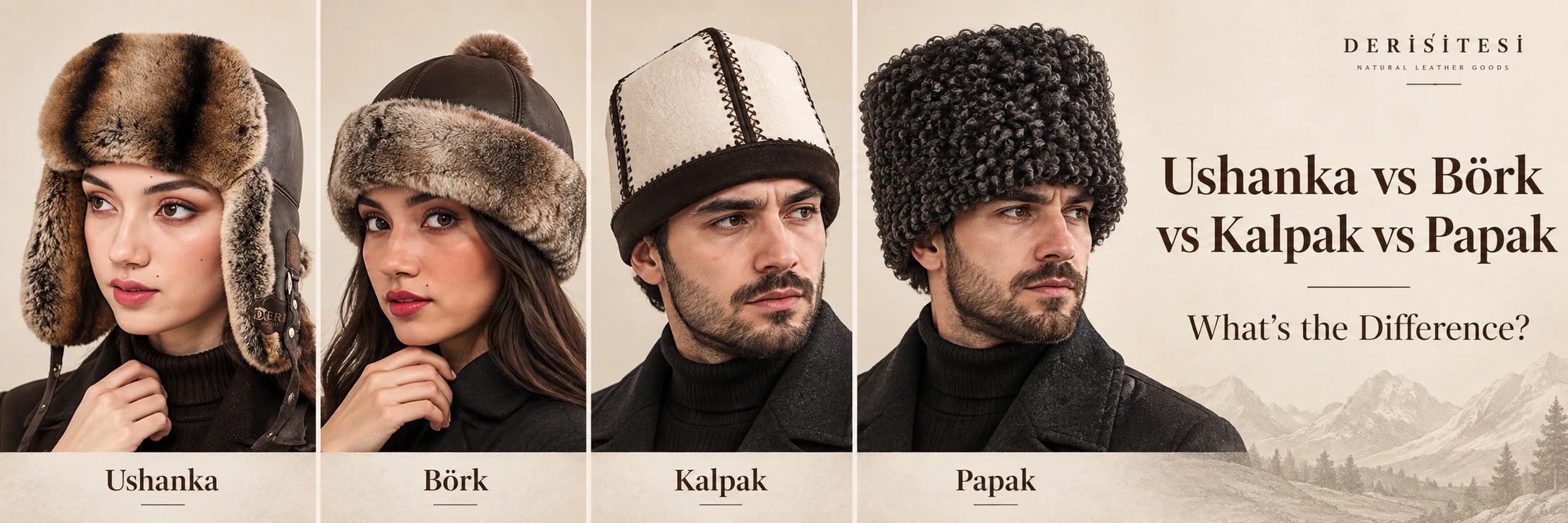
For more detail, see our guide to Ushanka vs Börk vs Kalpak vs Papak.
How Should a Papakha Fit?
A papakha should feel secure without creating uncomfortable pressure.
Because a taller hat has more weight and leverage than a thin beanie, correct sizing becomes particularly important. A hat that is too loose may shift on the head. One that is too tight may create pressure around the forehead and temples.
Measure the widest part of your head with a soft measuring tape. Keep the tape level and do not pull it tight.
For DeriSitesi hats, the standard adult size ranges are:
If you are between sizes or prefer a looser fit, do not guess based only on the size label you normally wear in another brand. Use the actual head circumference.
Our full Leather Hat Sizing Guide explains the measurement process in more detail.
Papakha vs Kalpak vs Ushanka
These terms are frequently mixed together online, but they should not be treated as exact synonyms.
Papakha
A papakha is usually a tall or rounded traditional Caucasian hat made with substantial wool or sheepskin. It is known more for its distinctive silhouette than for ear coverage.
Kalpak
Kalpak is a broader traditional category. Depending on the region, the shape, material and construction can vary more widely than with a papakha.
Ushanka
An ushanka is defined mainly by its fold-down ear flaps. It is a practical winter style focused on protecting the ears and sides of the head.
Kubanka
A kubanka is a shorter, more compact cylindrical style related to Caucasian and Cossack headwear.
In short: if the main feature is fold-down ear flaps, buyers usually mean an ushanka. If the main feature is a tall or rounded Caucasian silhouette, they usually mean a papakha. The term kalpak is used more broadly for several regional traditional hat forms.
You can also browse our traditional hat collection and leather kalpak collection to compare different silhouettes.
What to Check Before Buying a Papakha Hat
1. Exact material
Look for specific wording. “Sheepskin,” “karakul,” “lamb leather” and “faux fur” describe different materials. The seller should make the construction clear.
2. Real measurements
Do not rely only on S, M, L or XL. A seller who provides the corresponding head circumference in centimeters makes accurate sizing much easier.
3. Hat height
Two hats in the same head size can look completely different if one has a much taller crown. If appearance matters to you, check the overall height or ask the seller.
4. Wool texture
Long wool, short wool and tightly curled fleece create very different silhouettes. Study close-up product photos rather than relying only on the front image.
5. Interior construction
The outside gets most of the attention, but the interior determines comfort and structure. Look for clear photographs or descriptions of the inside of the hat.
6. Handmade variation
Natural leather and sheepskin are not industrially identical materials. Small differences in grain, curl or tone can be part of genuine natural material rather than a defect.
7. Sizing support
If you have a large head, are between sizes or want a particular fit, ask before ordering. A few minutes spent confirming the measurement can prevent an expensive international exchange.
What Do Buyers Notice Most?
What buyers often mention
Etsy buyers repeatedly mention the craftsmanship, warmth, accurate fit and fast international delivery of DeriSitesi products.
For sizing, we still recommend measuring your head in centimeters rather than relying only on a usual size label.
How to Care for a Papakha
Natural sheepskin and leather need gentle care.
- Shake the hat gently after wear to restore the wool.
- Allow moisture to dry naturally in a ventilated place.
- Keep it away from radiators, hair dryers and direct high heat.
- Do not crush it under heavy objects during storage.
- Avoid soaking the leather.
- Use a specialist leather/sheepskin cleaner for serious stains.
If the hat becomes slightly compressed during shipping, let it rest at room temperature and gently reshape it by hand.
Avoid aggressive brushing unless you know the specific wool or fur type can tolerate it.
For long-term storage, keep the hat dry, ventilated and supported so the crown maintains its shape.
Is a Papakha Right for You?
A papakha is a good choice if you want a winter hat with a strong traditional silhouette, natural material character and more visual presence than a conventional beanie.
Choose one if you value:
- Caucasian-inspired traditional styling;
- natural sheepskin or wool;
- substantial insulation;
- handmade construction;
- and a distinctive tall or rounded profile.
If you primarily need maximum ear and neck coverage, compare it with an ushanka or trapper hat before deciding.
If you want something more understated, a shorter kalpak, kubanka-style hat or leather winter cap may suit you better.
The best choice depends not only on history or appearance, but on how, where and in what weather you actually plan to wear the hat.
Papakha Hat FAQ
What is a papakha hat?
A papakha is a traditional brimless wool or sheepskin hat associated especially with the Caucasus. Many examples have a tall cylindrical or rounded silhouette.
Is a papakha the same as a kalpak?
Not exactly. The names can overlap historically and commercially, but kalpak is used for a wider range of traditional hat forms. Material and silhouette should always be checked rather than relying on the name alone.
Is a papakha the same as an ushanka?
No. An ushanka is characterized by fold-down ear flaps. A classic papakha usually has a taller wool-covered silhouette and does not provide the same ear-flap system.
What is a papakha traditionally made from?
Sheepskin is one of the traditional materials. Some papakha styles are associated with karakul sheepskin. Modern versions may also use different leather, fur or faux-fur constructions, so check each product description.
How should a papakha fit?
It should sit securely without painful pressure around the forehead or temples. Measure your head circumference in centimeters before ordering.
Can I wear a papakha every day?
Yes. Although the papakha has strong traditional associations, modern versions can be worn as practical winter headwear. A shorter or less voluminous model may be easier for everyday use.
Is karakul the same as every curly-fur papakha?
No. A curled appearance does not by itself prove that a hat is genuine karakul. The seller should identify the actual material clearly.
How do I choose between a papakha and an ushanka?
Choose a papakha for its traditional tall silhouette and surrounding wool insulation. Choose an ushanka when fold-down ear coverage and protection from wind around the ears are more important.
Explore Handmade Traditional Hats
Compare current traditional hat styles, materials and sizes if you are choosing between papakha-inspired, börk and kalpak silhouettes.
Browse Traditional Hats →Choosing a Handmade Papakha from DeriSitesi
When choosing a traditional hat online, focus on three things first: material, measurement and construction.
Check the actual material used in the individual product. Measure your head in centimeters. Then compare the height, wool texture and overall silhouette with the style you want.
DeriSitesi traditional hats are handmade in Istanbul and are available in a wide range of head sizes. If you are unsure about the correct fit, contact us with your head circumference before ordering.
You can explore our Traditional Hats and Leather Kalpaks, or first read our complete Leather Hat Buying Guide.