

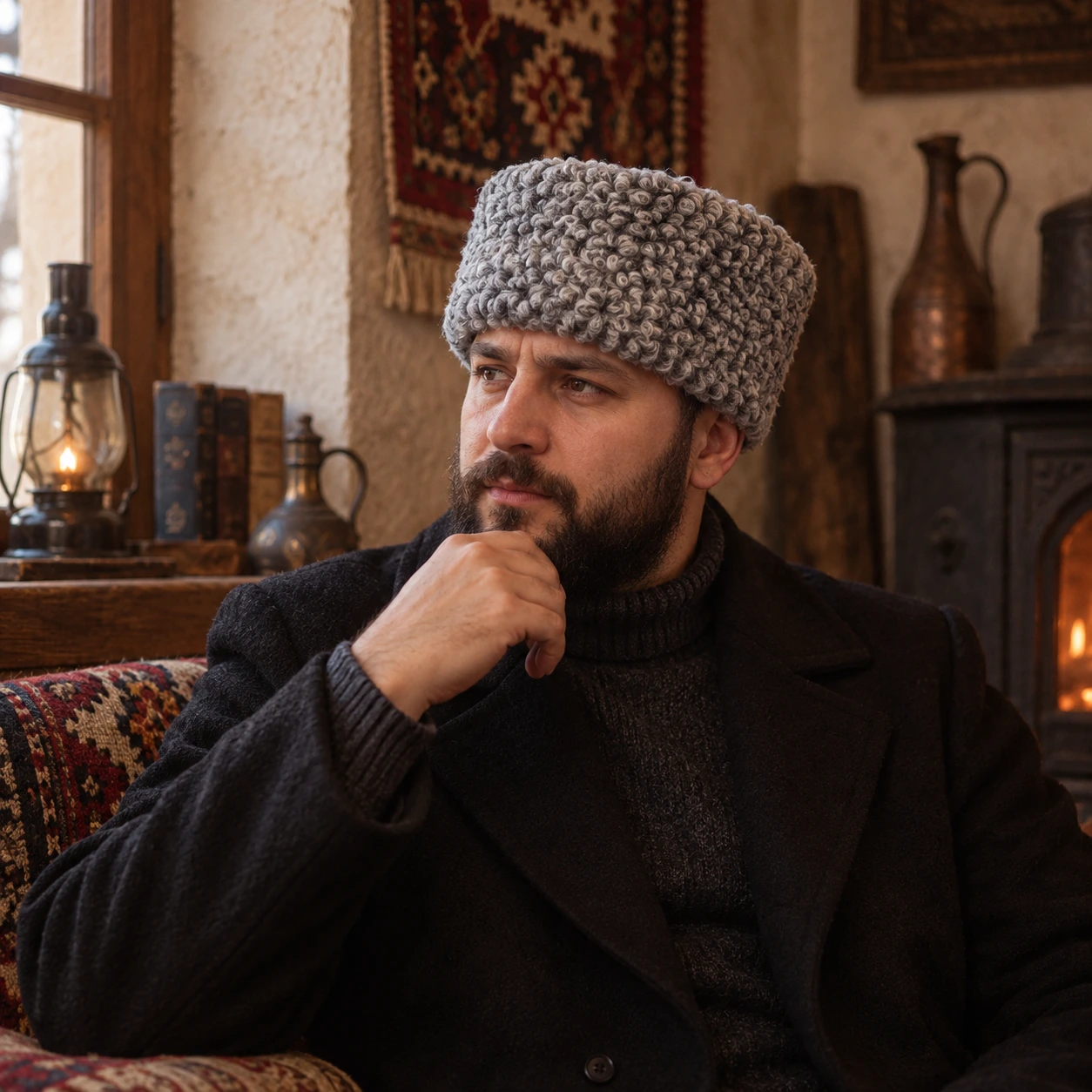
Karakul hats are easy to recognize by their compact, curly surface, but the material names used online can be much harder to understand. Product listings may use terms such as karakul, astrakhan, Persian lamb, “astrakhan-style” or “karakul-pattern leather” as though they mean exactly the same thing.
They do not always describe the same material. For a buyer, the safest approach is to separate the visual style from the actual construction. A hat may have the curled look associated with karakul while being made from embossed or patterned lamb leather rather than genuine karakul.
This guide focuses on material terminology, texture, construction, fit and buying checks. If you are mainly researching the traditional Caucasian hat style itself, see our Papakha Hat Guide. For broader winter-hat materials and fit, use the Leather Hat Buying Guide.
Table of Contents
What Is a Karakul Hat?
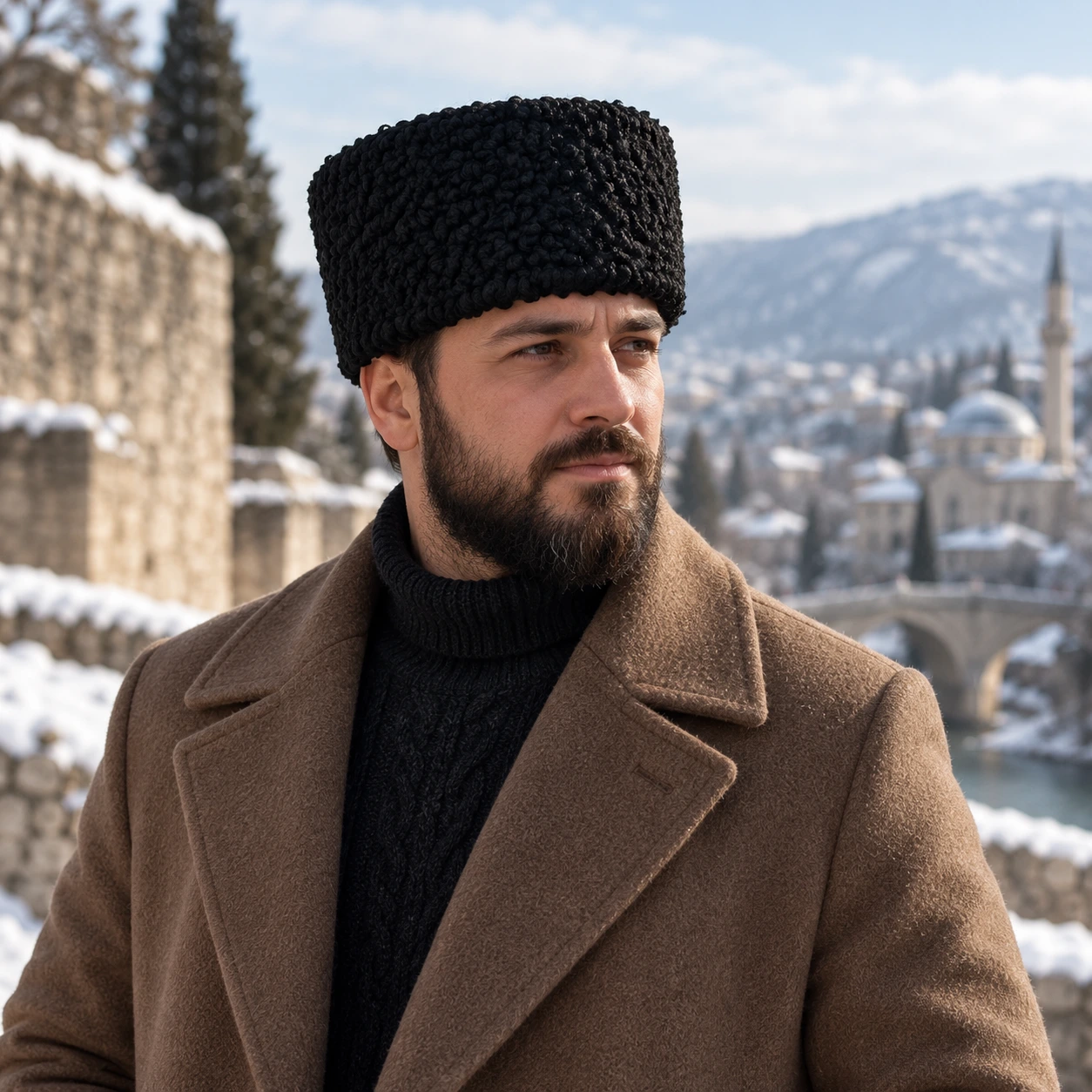
A karakul hat is commonly understood as a hat made from, or visually associated with, the tightly curled fleece of Karakul sheep. The compact curl pattern gives the surface a distinctive texture that looks very different from long-haired sheepskin or fluffy fur.
In traditional headwear, karakul can appear in tall papakha-style hats, lower-profile kalpak forms and other brimless winter designs. The material can therefore be part of several different hat shapes.
That distinction matters: karakul describes a material or surface character, while papakha and kalpak primarily describe hat forms and cultural styles. A papakha can use karakul, but not every papakha is karakul. Likewise, a karakul-textured hat is not automatically one specific traditional style.
Karakul, Astrakhan and Persian Lamb: Why the Names Overlap
Online sellers often place the terms karakul, astrakhan and Persian lamb close together. Historically and commercially, these names have been used for related curled-lamb materials, but modern retail wording is not always consistent.
This inconsistency is one reason buyers should not rely on the product title alone. A listing titled “astrakhan hat” may refer to genuine curled sheep material, a lambskin surface treated to resemble that texture, or simply an astrakhan-inspired visual pattern.
The product description should answer a more useful question: What is the hat actually made from?
Genuine Karakul vs Astrakhan-Pattern Lambskin
This is the most important distinction in the entire guide.
Genuine karakul
A product described as genuine karakul should clearly identify karakul as the actual natural material used in the hat. The curled surface is part of the material itself rather than a printed or embossed visual effect.
Astrakhan-pattern or karakul-pattern lambskin
A different construction can use genuine lamb leather whose surface has been finished, embossed or patterned to create a curly astrakhan-like appearance. The underlying material is still genuine lamb leather, but it should not be presented as genuine karakul if it is not.
Neither construction is automatically “bad.” They are simply different products. The problem begins when a visual pattern is described as though it were the same material as genuine karakul.
For DeriSitesi and other sellers using multiple traditional-hat constructions, the individual product page should therefore state the exact material instead of relying only on style words.
How the Texture and Surface Should Be Described
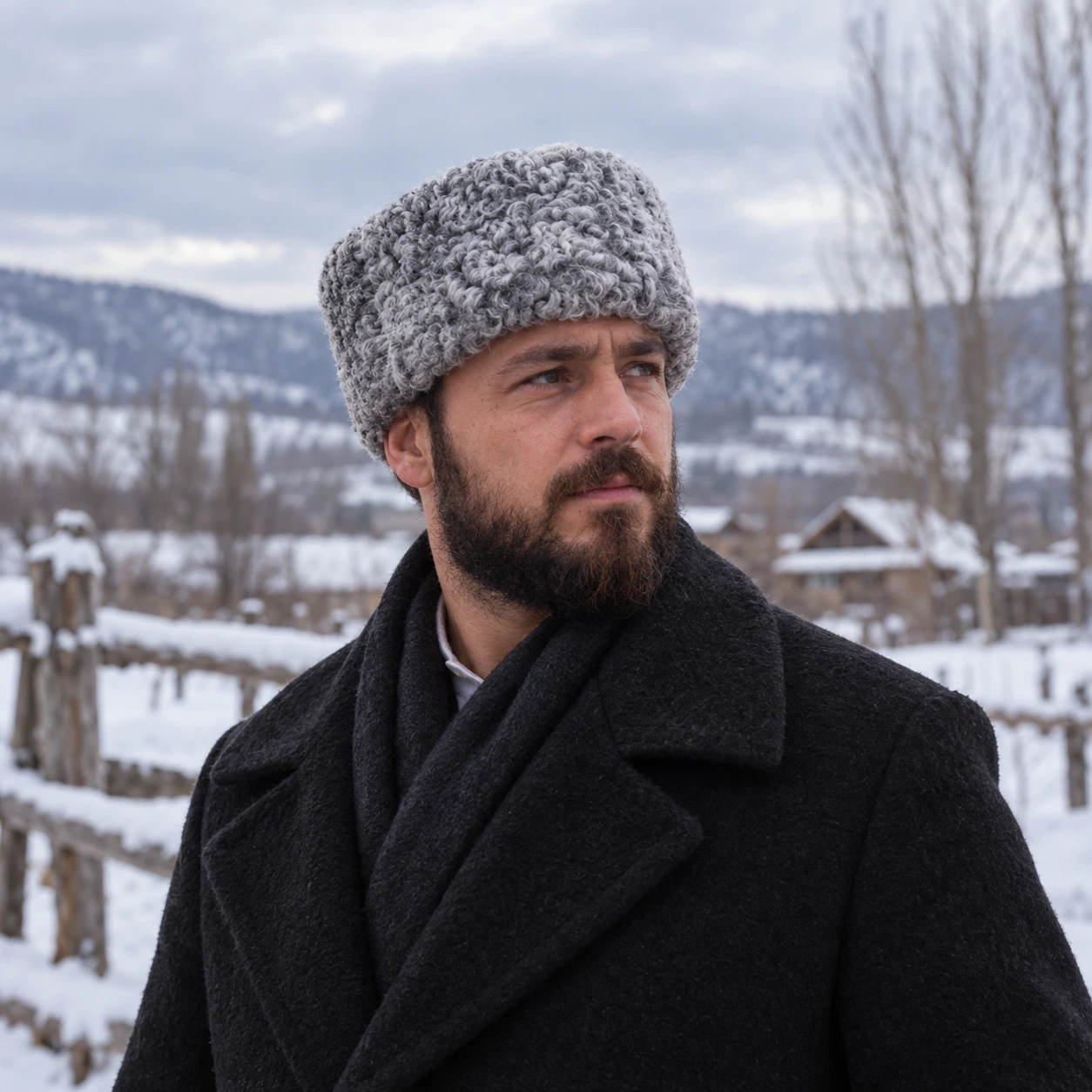
Karakul-style surfaces are usually identified by a close, curled or wave-like texture rather than long, open wool fibers. The appearance can range from tight curls to broader waves depending on the specific material and finish.
Natural materials can also show variation. Small differences in curl direction, density, tone and surface pattern should not automatically be treated as defects.
When evaluating a hat online, look for:
- close-up photographs of the surface;
- side and rear views, not only one front image;
- clear wording about whether the texture is natural karakul or patterned lambskin;
- consistent stitching around panel joins;
- and a description of the interior material.
How Karakul-Style Hats Are Constructed
A traditional-looking karakul or astrakhan-style hat can be built in several ways. Some designs use the curled material as the visible outer body. Others combine a leather crown with a textured band or use patterned lambskin panels to create the full exterior shape.
The interior may be lined with textile, sheepskin, wool or another material depending on the model. This affects comfort and warmth just as much as the outside appearance.
Construction quality is visible in details such as:
- clean panel alignment;
- even seam spacing;
- balanced hat height;
- secure lining attachment;
- consistent lower-edge finishing;
- and a crown shape that holds its form without looking rigid or distorted.
Handmade production can also create small differences from one hat to another. Those differences are normal when they come from natural leather and hand-cut materials rather than poor assembly.
Are Karakul Hats Warm?
A karakul hat can be suitable for cold weather, but the word “karakul” alone does not tell you exactly how warm the finished hat will feel.
Warmth depends on the complete construction:
- outer material;
- lining type and thickness;
- hat height and crown coverage;
- how closely the lower edge fits around the head;
- wind exposure;
- and the wearer’s activity level.
A lower-profile hat with a dense lining may feel warmer than a taller design with a thinner interior. For this reason, unsupported claims such as a guaranteed comfort temperature should be treated cautiously unless they come from controlled testing.
How Should a Karakul Hat Fit?
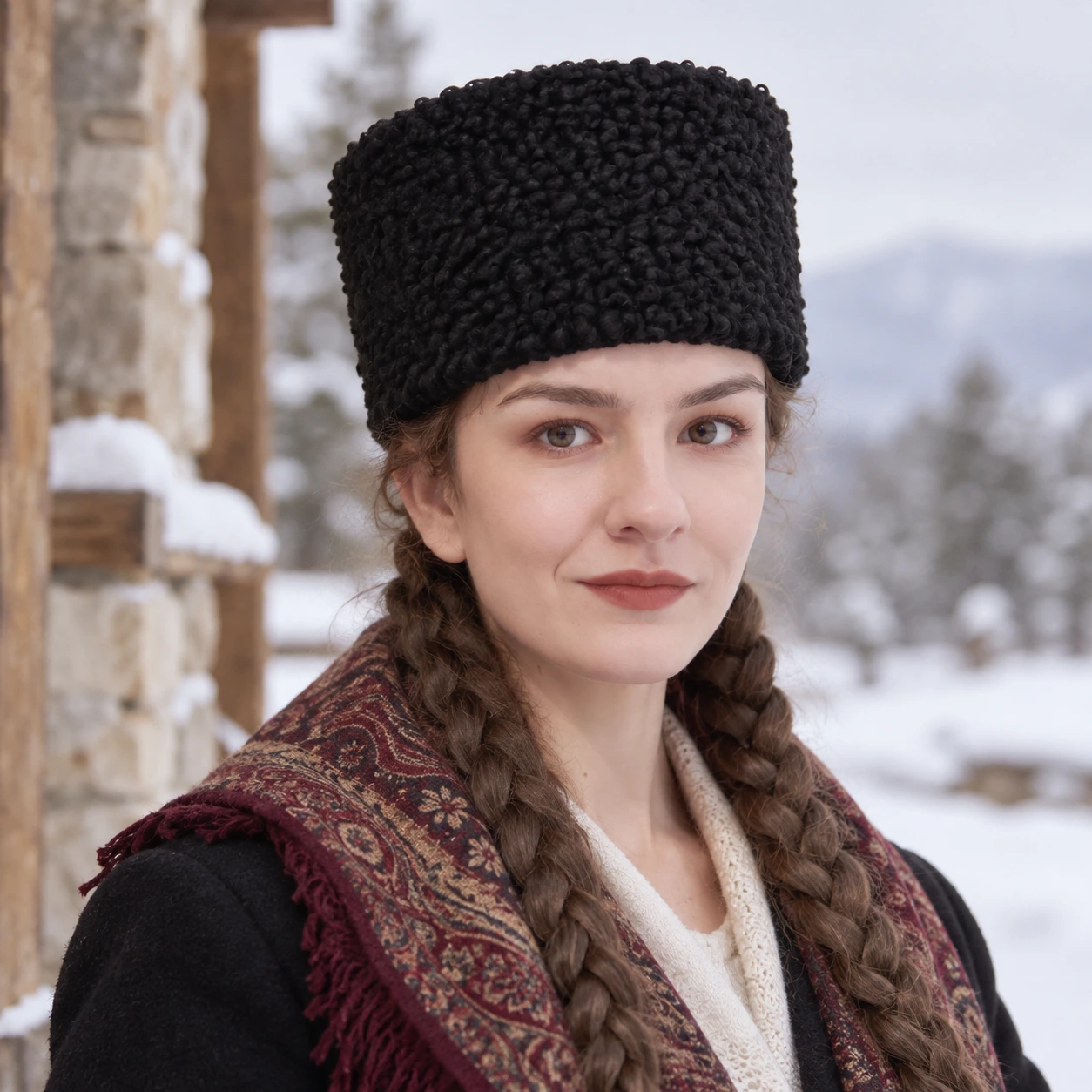
A karakul or astrakhan-style hat should sit securely without creating painful pressure around the forehead or temples. Because many traditional shapes are relatively structured, incorrect sizing can make the hat appear too tall, too loose or compressed.
DeriSitesi adult sizing generally runs from XS (53–54 cm) to 3XL (65–66 cm) on suitable models. Measure around the widest part of your head, normally just above the eyebrows and ears.
For the complete cm/inch conversion table and measurement method, see our Leather Hat Sizing Guide.
Karakul Hat, Papakha and Kalpak: Style vs Material
These terms are often mixed together in search results, but they answer different questions.
| Term | Usually describes | What to verify |
|---|---|---|
| Karakul | Material / curled surface | Whether genuine karakul or only karakul-style pattern |
| Papakha | Traditional Caucasian hat form | Height, silhouette and actual material |
| Kalpak | Traditional hat style used across multiple regions | Regional style, material and construction |
| Astrakhan | Commercial material/style term | Exact material specification |
For more detail on traditional hat forms, see Ushanka vs Börk vs Kalpak vs Papak and our dedicated Papakha Hat Guide.
What Quality Details Should You Check?
Material names matter, but workmanship matters too. When inspecting a karakul-style hat, check whether the surface and seams look intentional rather than uneven or distorted.
Useful quality checks include:
- Material disclosure: the description should clearly identify genuine karakul, lambskin, patterned leather or another construction.
- Panel matching: texture and direction should look balanced across adjoining sections.
- Seams: stitching should be consistent and not pull the surface out of shape.
- Lining: the interior should sit smoothly without bunching.
- Shape: the crown should hold the intended silhouette.
- Size information: exact head circumference is more useful than only S/M/L.
How to Care for a Karakul or Astrakhan-Style Hat
Care depends on the actual material. This is another reason to confirm whether you own genuine karakul, smooth or embossed lamb leather, or a mixed construction. For material-specific cleaning and storage basics, see our Leather Hat Care & Storage Guide.
- Avoid machine washing.
- Do not soak the hat.
- Let damp leather dry naturally away from radiators, hair dryers and direct high heat.
- Store the hat without crushing the crown.
- Use only cleaning methods appropriate to the specific material.
- For deep cleaning, use a leather/fur specialist when the product construction requires it.
Do not aggressively brush or flatten a textured surface simply to make every curl look identical. Natural texture is part of the material’s appearance.
What to Check Before Buying Online
Before buying a karakul hat online, check the following:
- Does the seller say genuine karakul, or only “karakul-style”?
- Is the exterior natural curled material, patterned lambskin or another leather?
- What is the interior lining?
- Are close-up photographs available?
- Is the exact head-size range shown in centimeters or inches?
- Does the seller distinguish style names such as papakha and kalpak from material names?
- Are natural variations in texture explained?
- Are care and return conditions clear?
A trustworthy product page should make these points easy to understand without forcing the customer to guess from photographs alone.
What Buyers Notice Most
What DeriSitesi buyers often mention
Public DeriSitesi Etsy feedback frequently highlights craftsmanship, appearance, accurate sizing, warmth and fast international delivery.
For traditional hats, clear material descriptions and correct sizing are especially important because surface texture and silhouette are a large part of what the buyer expects to receive.
Explore Handmade Traditional Hats
Compare current traditional leather and fur hats by silhouette, material, texture, lining and size.
FAQ
Is karakul the same as astrakhan?
The terms are closely related in traditional and commercial use, but modern product listings are inconsistent. Always check the exact material description rather than assuming the words are interchangeable.
Is Persian lamb the same as karakul?
Persian lamb is another commercial term often associated with curled lamb materials. Because naming varies between sellers and markets, the product-level material specification is more reliable than the title alone.
Is an astrakhan-pattern lambskin hat genuine karakul?
No. Genuine lamb leather can be embossed or finished to create an astrakhan-like pattern, but that does not make it genuine karakul. A transparent product description should state the difference.
Are all papakha hats made from karakul?
No. Papakha describes a traditional hat style, and different papakha models can use different types of sheepskin, wool or other materials.
How do I choose the right karakul hat size?
Measure around the widest part of the head above the eyebrows and ears, then compare the result with the specific product size chart. Exact centimeters or inches are more useful than relying only on letter sizes.
Can karakul-style hats be worn every day?
Yes, depending on the shape and your personal style. Lower-profile versions can look more understated, while taller traditional silhouettes create a stronger heritage look.
[…] a different appearance from longer-haired sheepskin versions. For the material differences, see our Karakul Hat Guide. You can also find a general historical overview in the Papakha reference […]
[…] For the material and terminology differences, read our Karakul Hat Guide. […]