


Leather hat care is not a single routine that works for every hat. Smooth lamb leather, sheepskin, shearling, karakul-style surfaces, textile linings and mixed-material winter hats all react differently to moisture, pressure and cleaning products.
The safest approach is simple: identify the material first, use the least aggressive care method that solves the problem, let moisture dry naturally, and store the hat in a way that protects both the leather and its shape.
This guide focuses specifically on leather hats, börks, kalpaks, ushankas, trapper-style hats and other structured winter headwear. It covers routine cleaning, drying, reshaping and off-season storage without turning every small mark into a reason for heavy treatment.
Table of Contents
- Quick Leather Hat Care Checklist
- Identify the Hat Material
- Cleaning Smooth Leather
- Sheepskin and Shearling Care
- Karakul and Astrakhan-Style Care
- Drying and Reshaping
- Off-Season Storage
- Humidity, Mold and Odor
- Professional Cleaning
- Care Mistakes to Avoid
- Leather Hat Care FAQ
Quick Leather Hat Care Checklist
- Identify the material before cleaning. Smooth leather, sheepskin, karakul and faux trim do not need the same treatment.
- Remove surface dust gently. Use a soft, clean cloth or an appropriate soft brush.
- Do not machine wash or soak the hat.
- Dry naturally at room temperature. Avoid radiators, hair dryers and direct high heat.
- Protect the shape while drying and storing.
- Store only when completely dry.
- Use a breathable cloth cover rather than a sealed plastic bag for long-term storage.
- Use professional leather or fur cleaning for serious stains, mold or uncertain materials.
Start by Identifying the Hat Material
Before cleaning or conditioning a leather hat, check the product description, care label and visible construction. A hat that looks like “leather and fur” may actually combine several different materials.
| Material | Main Care Concern | Avoid |
|---|---|---|
| Smooth lamb leather | Surface marks, drying, finish compatibility | Soaking, alcohol, harsh cleaners, direct heat |
| Sheepskin / shearling | Leather side and wool side need different handling | Heavy wetting, aggressive brushing while damp |
| Karakul / astrakhan-style surface | Preserving curl pattern and surface direction | Flattening, hard brushing, rubbing against the curl |
| Textile lining | Sweat and odor buildup | Pouring liquid cleaner into the hat |
If you are unsure whether a surface is smooth lamb leather, sheepskin, karakul or a patterned material, confirm the product description before applying any cleaner. Our Natural Leather Smell, Color & Texture Guide explains which surface differences are usually normal.
How to Clean a Smooth Leather Hat
Routine care should be conservative. Most hats do not need frequent deep cleaning.
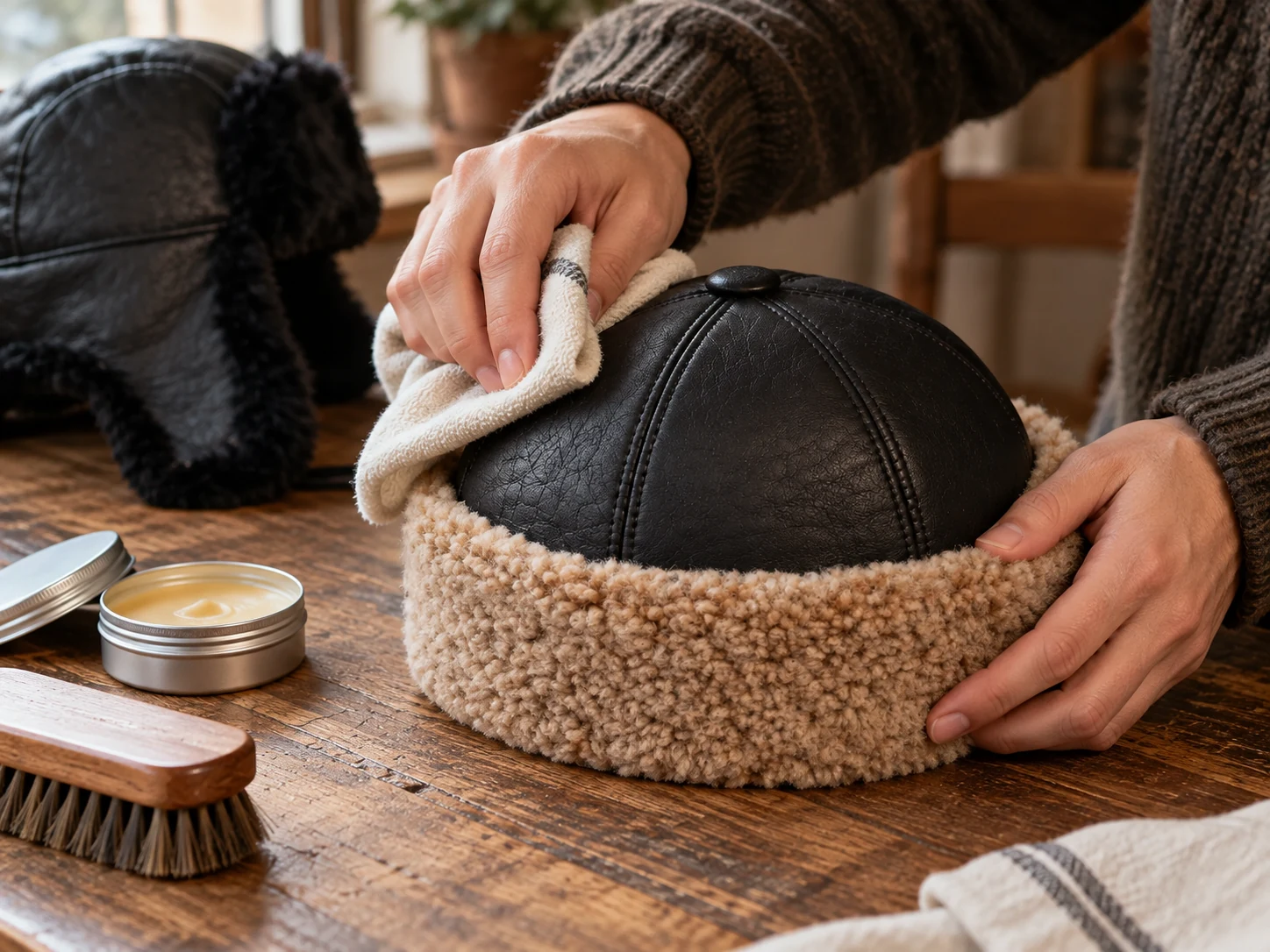
- Remove dry surface dust with a soft, clean cloth.
- If needed, use a cloth that is only slightly damp rather than wet.
- Wipe gently without scrubbing one area aggressively.
- Let the hat dry naturally before storing or wearing it again.
- If a leather-specific cleaner or conditioner is required, test it first on a hidden area.
Do not use alcohol, acetone, bleach, strong detergent, perfume or acidic household mixtures on the leather surface. Products that work on one finish can darken, dull or stain another.
How often should a leather hat be conditioned?
There is no universal monthly schedule. Conditioning depends on the leather finish, climate, use and the manufacturer’s instructions. Over-conditioning can leave residue or change the surface, so use treatment when the leather actually needs it rather than automatically after every wear.
How to Care for Sheepskin and Shearling Hats
Sheepskin and shearling combine leather with natural wool, so both sides matter. The wool should not be treated like ordinary synthetic fleece, and the leather side should not be soaked.
- Let loose dust fall away naturally or use a very gentle material-appropriate brush when fully dry.
- If the hat becomes damp, allow it to dry slowly at room temperature.
- Do not aggressively comb or pull wet wool fibers.
- Keep the hat away from heaters and hot airflow.
- For deep stains or heavy odor, use a cleaner experienced with sheepskin rather than experimenting with household chemicals.
Material terminology can be confusing, so if you are unsure what you own, see our Sheepskin vs Shearling Hats guide.
How to Care for Karakul and Astrakhan-Style Hats
Karakul and astrakhan-style hats are different from smooth leather because the visible surface may have a compact curled or wave-like texture. Care should preserve that texture rather than flatten it.
- Do not press the hat under heavy objects.
- Do not brush aggressively against the curl direction.
- Do not try to make every curl look identical.
- Allow damp areas to dry completely before lightly arranging the surface.
- Use professional cleaning when the material is genuine karakul or when the construction is unclear.
For the material and terminology differences, read our Karakul Hat Guide.
What to Do If a Leather Hat Gets Wet
If a leather hat becomes wet from rain or snow, the goal is to remove excess moisture without forcing the drying process.
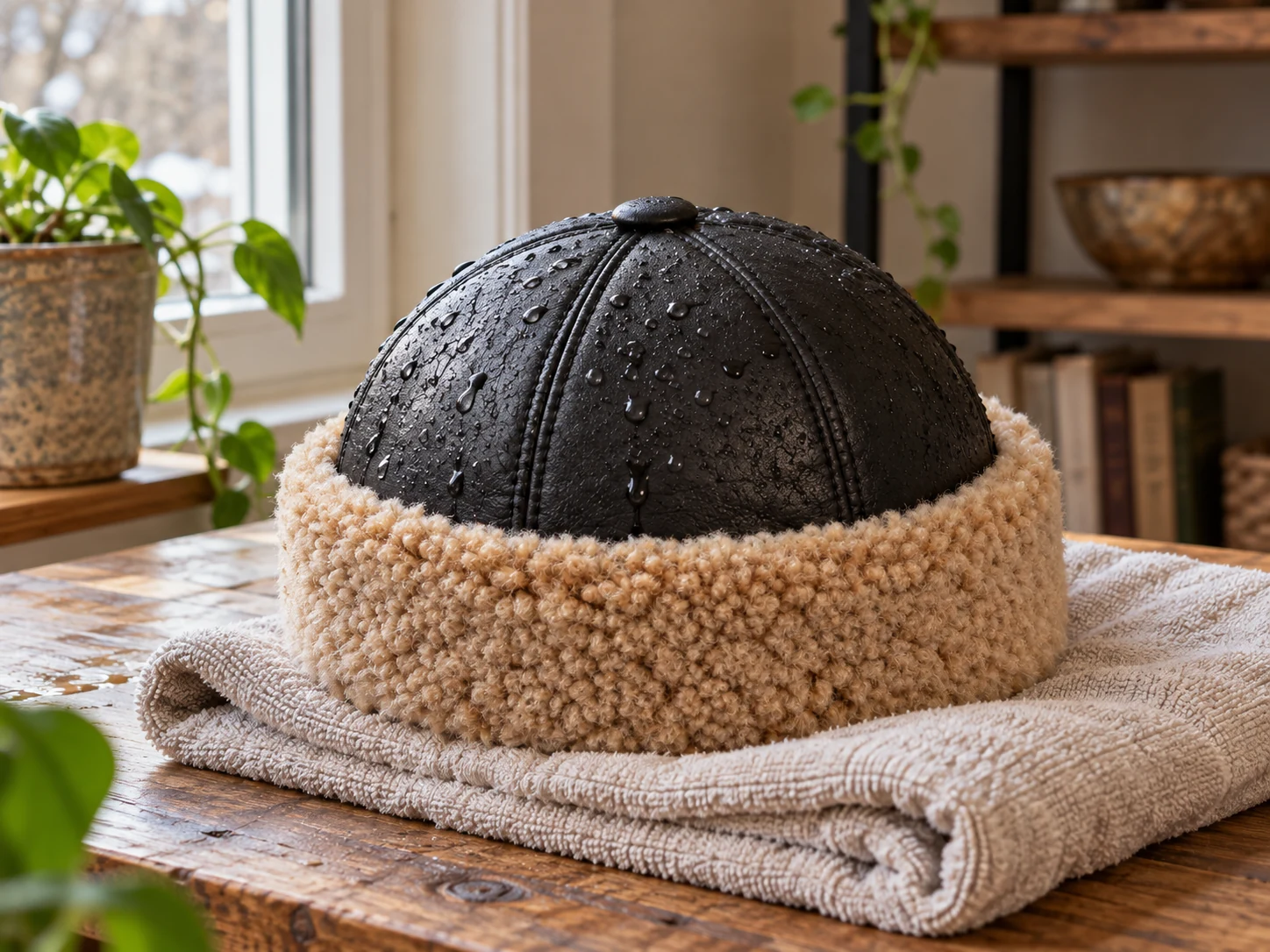
- Blot, do not rub. Use a clean, absorbent cloth to remove surface water.
- Support the shape. Place clean, colorfast paper or soft cloth loosely inside if the crown needs support.
- Dry at room temperature. Choose a ventilated place away from direct heat.
- Leave enough time. Do not store or reshape aggressively while the hat is still damp.
- Check the surface after drying. If the leather feels unusually stiff or damaged, use material-specific care or professional help.
Do not place a wet hat on a radiator, next to a stove or under a hot hair dryer. Rapid heat can harden leather, distort the crown or affect adhesives and lining materials.
How to Reshape a Crushed or Flattened Leather Hat
Minor shape loss can happen during shipping or storage. The safest correction depends on how structured the hat is.
- Place the hat on a clean surface.
- Gently support the crown from the inside with soft, clean material.
- Use your hands to guide the hat back toward its intended silhouette.
- Do not force sharp folds out of cold, stiff leather.
- Leave the hat supported for several hours before checking the shape again.
If the hat contains rigid internal support, thick sheepskin, karakul or decorative structure, avoid strong stretching or steaming unless the maker specifically recommends it. Major distortion is better handled by a hat or leather specialist.
Off-Season Storage: How to Store a Leather Hat Correctly
Long-term storage is different from placing a hat on a shelf overnight. Over several months, pressure, humidity and lack of airflow can affect the shape and surface.
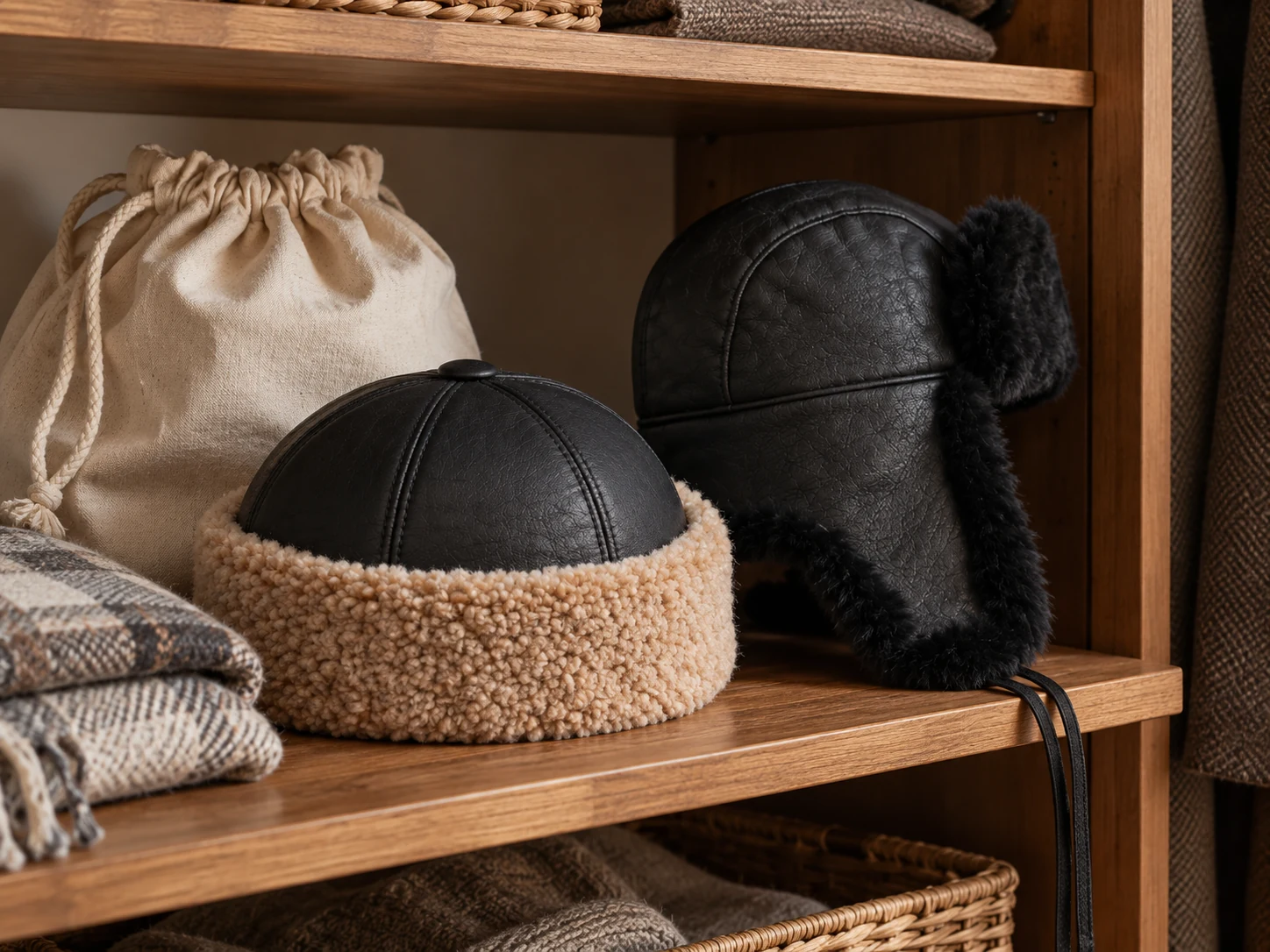
Clean and dry it first
Never put away a damp or sweaty hat. Remove surface dust and allow the interior to air completely before storage.
Support the crown
Use clean, acid-free tissue, soft cloth or another lightweight support that does not stretch the hat. The goal is to prevent collapse, not to force the crown larger.
Keep pressure off the hat
Do not stack heavy clothing, boxes or other hats on top of a structured leather hat. Sheepskin and karakul surfaces can also become flattened if compressed for months.
Choose a cool, dry, shaded place
Avoid direct sunlight, damp basements, hot attics and areas next to heating equipment. Stable indoor conditions are preferable to extreme heat or humidity.
Cloth Bag vs Plastic Bag: Which Is Better?
For long-term storage, a breathable cloth cover is generally safer than sealing a leather hat in a plastic bag. A cloth cover keeps off dust while allowing some airflow.
A sealed plastic bag can trap residual moisture. If the hat was not completely dry before storage, that closed environment can increase the chance of musty odor or moisture-related problems.
If a rigid storage box is used, make sure the hat is clean and dry and the box does not crush the crown. A breathable inner wrap or cloth bag can provide extra protection from dust and rubbing.
How to Reduce Humidity and Mold Risk
Mold risk is mainly a storage-environment problem. The best prevention is to keep the hat dry before storage and choose a location with reasonable airflow and controlled humidity.
- Do not store a damp hat.
- Avoid wardrobes against persistently damp walls.
- Check stored hats periodically during long off-season periods.
- If you notice a musty smell, investigate the storage area as well as the hat.
- Do not spray strong disinfectants directly onto leather or natural wool.
If you see actual mold growth, isolate the item from other leather goods and use professional leather or fur cleaning instead of simply masking the smell.
What About Sweat and Interior Odor?
Hats contact the head directly, so odor often starts in the sweatband or lining rather than the outer leather.
After regular wear, let the hat air before putting it into a closed wardrobe. Avoid spraying perfume or alcohol into the interior. If the lining requires cleaning, follow the material-specific instructions rather than saturating the whole hat.
For a deeper explanation of new-leather odor, moisture odor and normal material variation, see our Natural Leather Smell, Color & Texture Guide.
When Professional Cleaning Is the Safer Choice
Professional leather or fur cleaning is the better option when:
- the hat has a large oil, ink or dye stain;
- you see mold or strong mildew odor;
- the material is genuine karakul or another sensitive natural surface;
- the lining is heavily soiled but cannot be removed;
- the leather finish is unknown;
- there is structural damage, loose stitching or severe deformation;
- or the hat has high financial or sentimental value.
Leather Hat Care Mistakes to Avoid
- Machine washing the hat.
- Soaking it completely in water.
- Drying it with strong direct heat.
- Using alcohol, bleach, acetone, lemon or strong household cleaner.
- Applying oil or conditioner without checking leather compatibility.
- Brushing natural wool or karakul aggressively while damp.
- Storing the hat under heavy objects.
- Sealing a damp hat inside plastic.
- Ignoring odor caused by a humid storage space.
Leather Hat Care FAQ
Can I wash a leather hat in a washing machine?
Generally no. Machine washing can distort the hat, affect the leather finish and damage linings, fur, adhesives or internal structure.
Can I dry a leather hat with a hair dryer?
High heat is not recommended. Let the hat dry naturally at room temperature in a ventilated place.
Should I use leather conditioner after every wear?
No. Conditioning frequency depends on the leather, finish and use. Apply only a compatible product when needed and test it on a hidden area first.
Can I store a leather hat in a plastic bag?
For long off-season storage, a breathable cloth cover is usually a better choice. Plastic can trap moisture if the hat is not completely dry.
How do I keep a leather hat from losing its shape?
Store it without weight on top, support the crown lightly if needed and avoid folding structured hats.
Can a crushed leather hat be reshaped?
Minor deformation can often be improved by gentle hand shaping and supporting the crown. Severe damage or rigid constructions should be handled professionally.
How should I store a sheepskin or karakul hat?
Store it clean, fully dry, uncompressed and away from direct sunlight, heat and humidity. Avoid flattening natural wool or curled surfaces under other items.
What DeriSitesi buyers often mention
Public DeriSitesi Etsy feedback frequently highlights craftsmanship, warmth, sizing, appearance and fast international delivery. Good care and correct storage help preserve the same fit, shape and material character buyers expect when the hat arrives.
Explore Handmade Leather Hats
Compare current leather hats by material, lining, shape and available size, then follow the correct care routine for the model you choose.
[…] Natural sheepskin and leather need gentle care. For cleaning, drying and off-season storage, use our Leather Hat Care & Storage Guide. […]
[…] Some winter hat designs may include natural fur or faux-fur trims depending on the model. Materials should always be checked in the current product description because the appearance of two trims can be similar while the material, feel and care requirements differ. For cleaning, drying and storage after purchase, see our Leather Hat Care & Storage Guide. […]
[…] Leather Hat Care & Storage Guide covers drying, storage and common cleaning mistakes in more […]