


A kalpak hat is a traditional brimless head covering whose shape, material and cultural meaning vary by region. In modern English, the word is often used for structured felt, sheepskin or leather hats associated with Türkiye, Central Asia, the Caucasus and neighboring regions.
There is no single universal kalpak design. A Kyrgyz white felt ak-kalpak, a Turkish leather kalpak and a tall Caucasian-inspired winter hat can all look quite different even though the word kalpak may appear in their names. That is why it is more useful to understand the term, the regional context, the silhouette and the actual material than to treat every kalpak as the same hat.
This guide explains what a kalpak is, what the word means, how regional forms differ, which materials are commonly used today, how a kalpak should fit and what to check before buying one. For a direct side-by-side comparison with börk, ushanka and papak styles, see our Ushanka vs Börk vs Kalpak vs Papak guide.
Table of Contents
What Is a Kalpak Hat?
A kalpak is a traditional brimless hat term used across several cultures and regions rather than the name of one precisely standardized pattern. English dictionaries also record the spelling calpac or calpack. Collins describes it broadly as a large brimless cap made from felt or sheepskin and worn in parts of the Near East, while Turkish-language reference material from the Turkish Language Association describes a kalpak as a truncated-cone-shaped head covering made from leather, fur or fabric.
Those definitions already show why online product listings can look inconsistent: shape and material are not fixed by the word alone. One kalpak may be tall and cylindrical, another may taper upward, and another may be made from white felt with a very different construction.
For buyers, the practical rule is simple: treat kalpak as a family of traditional headwear terms, then check the individual product for its exact material, crown height, lining, regional inspiration and intended use.
What Does “Kalpak” Mean?
The word kalpak is well established in Turkish and related forms appear in several Turkic languages. English reference works often use calpac or calpack as alternative spellings. The word has also travelled beyond modern Türkiye through centuries of cultural contact, trade, migration and shared regional clothing traditions.
It is therefore misleading to translate kalpak as though it meant one exact modern product. In historical and regional use, it can refer to different brimless or high-crowned headwear forms. Even within one country, material and silhouette may change according to period, community, climate and purpose.
In English-language shopping and reference contexts, phrases such as kalpak hat, Turkish kalpak or traditional kalpak are commonly used. The most accurate description, however, should still explain the specific model rather than relying on the name alone.
Regional Kalpak Traditions
Kalpak traditions are found in a broad geographic area that includes parts of Anatolia, Central Asia, the Caucasus and neighboring regions. The shared name does not mean that all of these traditions are identical.
Some forms are strongly associated with felt-making, while others use sheepskin, leather, fur or textile construction. Some have a pronounced vertical crown; others are softer, flatter or more tapered. Decorative embroidery, turned edges, seams and color can also carry regional meaning.
This is why a product should not be presented as an exact historical or ethnic reproduction unless its construction and documentation genuinely support that claim. A modern handmade leather kalpak can be traditional-inspired without pretending to reproduce one specific museum or historical example.
At DeriSitesi, current kalpak models are handmade in Istanbul and use different leather, sheepskin, lining and surface treatments depending on the product. The individual product description is the correct place to confirm the material and construction of a specific hat.
The Kyrgyz Ak-Kalpak: A Specific Kalpak Tradition
The ak-kalpak is one important example of why regional distinctions matter. UNESCO describes Kyrgyz ak-kalpak craftsmanship as a traditional practice centered on a white felt men’s hat and inscribed the associated knowledge and skills on the Representative List of the Intangible Cultural Heritage of Humanity in 2019.
The Kyrgyz ak-kalpak has its own construction methods, symbolism, patterns and cultural context. It should not be used as a universal visual definition for every kalpak sold in Türkiye or elsewhere.
- Every ak-kalpak is a kalpak tradition, but not every kalpak is a Kyrgyz ak-kalpak.
- A white felt Kyrgyz form and a leather or sheepskin Turkish kalpak may share a related headwear term while differing substantially in construction.
- Regional names should be used carefully and specifically rather than as interchangeable marketing labels.
Main Kalpak Shapes and Styles
Because the word covers multiple traditions, there is no official global kalpak shape chart. Still, buyers will commonly encounter several broad silhouettes.
Structured cylindrical kalpaks
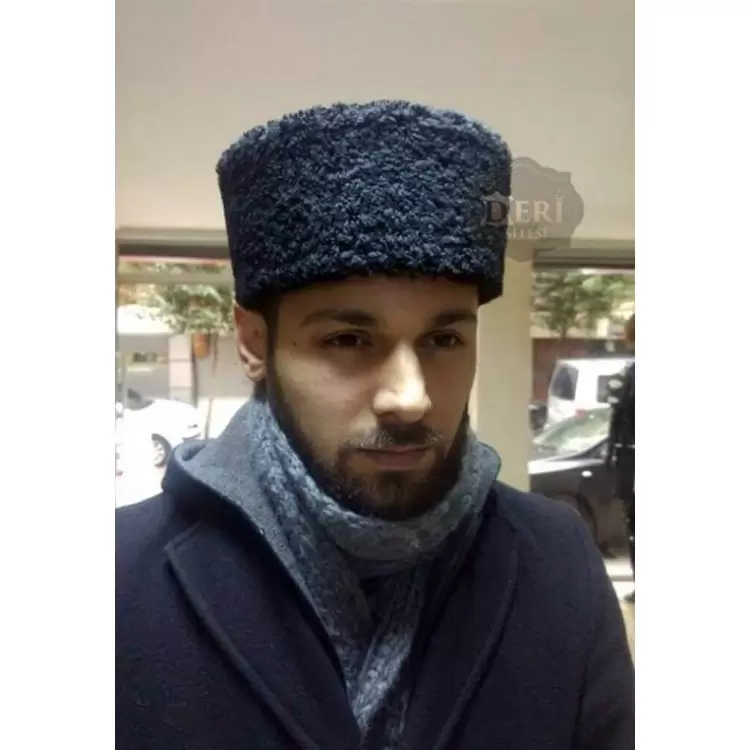
These have relatively straight sides and a defined crown. Leather, sheepskin or curly-surface materials can create a firm, upright appearance. This is the silhouette many international shoppers associate with Turkish or Caucasian-inspired winter kalpaks.
Tapered or conical kalpaks
Some kalpaks narrow toward the top or use a truncated-cone profile. The degree of taper can be subtle or visually prominent. Felt versions in Central Asian traditions may use this geometry very differently from leather winter models.
Soft felt kalpaks
Felt construction can produce lighter, more flexible forms. The Kyrgyz ak-kalpak is the best-known example internationally, but it represents a specific regional tradition rather than every felt kalpak.
Curly-surface or astrakhan-style kalpaks
Some modern kalpaks use genuine karakul, astrakhan-pattern lambskin or another curled surface. Here it is important to separate hat form from material. “Karakul” primarily describes material or surface character, not one universal crown shape. Our Karakul Hat Guide explains that distinction in detail.
What Materials Are Kalpak Hats Made From?
Traditional and modern kalpaks can be made from different materials. Common examples include:
- Felt: especially important in Central Asian traditions such as the Kyrgyz ak-kalpak.
- Sheepskin: used in many winter-oriented hats for its combination of leather and natural wool.
- Lamb leather: can form a smooth or patterned outer shell depending on treatment.
- Karakul / astrakhan: may refer to genuine curled lamb material, while some products use astrakhan-pattern or karakul-pattern lambskin instead.
- Textile linings: may be used inside leather models for comfort and shape support.
- Faux materials: can also appear in some contemporary products; the product description should state this clearly.
No single material is automatically “the authentic kalpak material” for every region. If material matters to you, read the specification for the exact hat rather than assuming it from the category name.
Kalpak vs Börk, Papakha and Ushanka
These terms often appear together online, but they describe different style families.
| Hat term | Typical distinguishing feature | Best way to identify it |
|---|---|---|
| Kalpak | Often structured, tall, cylindrical or tapered | Check regional context, crown shape and material |
| Börk | Often more compact or rounded in modern leather interpretations | Check the specific traditional reference and construction |
| Papakha / papak | Full, often fur-dominant Caucasian silhouette | Look at volume, regional context and material |
| Ushanka | Distinctive ear flaps that can be lowered | Ear-flap construction is the clearest identifier |
For a deeper explanation of papakha history and fit, see our Papakha Hat Guide. For the full four-style comparison, use the Ushanka vs Börk vs Kalpak vs Papak comparison.
How Should a Kalpak Hat Fit?
A kalpak should normally feel secure without creating pressure around the forehead or temples. A structured hat that is too loose may shift or tilt; one that is too tight can become uncomfortable and distort how the crown sits.
Measure around the widest part of your head, keeping the tape level above the eyebrows and ears. Do not pull the tape excessively tight. Then compare the measurement with the actual size chart for the product.
| Size | Head circumference | Approx. inches |
|---|---|---|
| XS | 53–54 cm | 20.9–21.3 in |
| S | 55–56 cm | 21.7–22.0 in |
| M | 57–58 cm | 22.4–22.8 in |
| L | 59–60 cm | 23.2–23.6 in |
| XL | 61–62 cm | 24.0–24.4 in |
| 2XL | 63–64 cm | 24.8–25.2 in |
| 3XL | 65–66 cm | 25.6–26.0 in |
These are DeriSitesi’s standard adult hat ranges; the exact product page should still be checked because thick linings and individual construction can affect fit. For measuring instructions, see the Leather Hat Sizing Guide.
What to Check Before Buying a Kalpak Online
Kalpak listings can use similar names for very different products. Before ordering, check the details that actually affect what you will receive.
- Exact outer material: felt, leather, sheepskin, genuine karakul, patterned lambskin or another material.
- Lining: quilted textile, cotton blend, sheepskin, wool or another lining.
- Crown height: two hats in the same size can look very different if one is substantially taller.
- Silhouette: cylindrical, tapered, rounded or soft.
- Head circumference: use your measurement rather than assuming your usual fashion size.
- Natural variation: genuine leather, wool and fur can vary slightly in color, curl and surface pattern.
- Regional wording: decide whether you want a Turkish-inspired leather kalpak, a Kyrgyz felt ak-kalpak, a Caucasian-style hat or another specific tradition.
- Return and custom-size terms: especially important for handmade or made-to-measure orders.
For a broader online purchase checklist covering leather quality, lining and construction, see our Leather Hat Buying Guide.
What DeriSitesi customers mention
Public Etsy feedback frequently discusses craftsmanship, fit, materials, warmth and international delivery. With structured hats such as kalpaks, accurate head measurement and checking the individual product material are especially important before ordering.
Explore Handmade Leather & Sheepskin Kalpaks
Compare current kalpak models by material, crown shape, color, lining and available size.
How to Care for a Leather or Sheepskin Kalpak
Care depends on the material. A felt ak-kalpak and a leather/sheepskin winter kalpak should not automatically be cleaned the same way.
For leather and sheepskin models, avoid machine washing and strong household detergents. Remove light surface dust gently, keep the hat away from direct heaters, allow damp material to dry naturally and store the crown where it will not be crushed. If the hat uses genuine wool or fur, follow the product-specific care instructions and consider professional cleaning for difficult stains.
Our Leather Hat Care & Storage Guide covers drying, storage and common cleaning mistakes in more detail.
Kalpak Hat FAQ
What is a kalpak hat?
A kalpak is a traditional brimless headwear term used across Türkiye, Central Asia, the Caucasus and nearby regions. Its exact shape and material vary by regional tradition and modern product design.
What does kalpak mean in English?
English dictionaries often use the spellings calpac or calpack for a traditional brimless felt or sheepskin cap. In current English shopping language, “kalpak hat” is commonly used to make the headwear meaning clear.
Is a kalpak a Turkish hat?
Kalpak is a Turkish word and the hat has an established place in Turkish clothing terminology, but related kalpak traditions also exist across Central Asia, the Caucasus and other neighboring regions. It is more accurate to identify the specific regional style rather than claim that every kalpak belongs to one single national tradition.
Is a kalpak the same as a papakha?
No. The terms sometimes overlap loosely in online listings, but papakha generally refers to a fuller Caucasian traditional hat form, while kalpak is a broader term that can include structured, tapered, felt, leather or sheepskin forms. See our Papakha Hat Guide for details.
Is a kalpak the same as a börk?
No. Modern börk models are often more compact or rounded, while kalpaks are frequently taller or more structured. Historical terminology can vary, so the safest comparison is by actual shape, construction and regional context.
What is an ak-kalpak?
The ak-kalpak is a specific Kyrgyz traditional men’s hat made from white felt. UNESCO inscribed the craftsmanship and knowledge associated with it on the Representative List of the Intangible Cultural Heritage of Humanity in 2019.
Are all kalpak hats made from sheepskin?
No. Kalpaks may be made from felt, sheepskin, leather, karakul or other materials depending on the region and model. Always check the product specification.
How should a kalpak fit?
It should feel secure without excessive pressure. Measure your head circumference and compare it with the individual size chart, especially when the hat has a thick lining or a highly structured crown.
Where can I buy a handmade leather kalpak?
You can compare current handmade models in the DeriSitesi Leather Kalpaks collection. Materials, lining, height and available sizes vary by model.
Sources and Further Reading
- Türk Dil Kurumu – Güncel Türkçe Sözlük and TDK reference material for the Turkish definition of kalpak.
- Collins English Dictionary – “calpac / kalpak” for English definition and spelling variants.
- UNESCO Intangible Cultural Heritage – Ak-kalpak craftsmanship for the Kyrgyz white felt tradition and its 2019 inscription.