

Sheepskin vs shearling hats can be confusing because the terms are often used loosely in winter clothing and accessories. Two hats may look almost identical while using different constructions: one may have a lamb-leather crown with a sheepskin-fur band, another may use sheepskin more extensively, and a third may be marketed as “shearling” because the wool remains attached to the hide.
For a buyer, the most useful approach is to look beyond the label and check where the leather is used, where the wool is used, whether the wool remains attached to the hide, how thick the lining is, and how the hat fits around the head.
This guide explains the practical difference between sheepskin and shearling hats, how those materials affect warmth and fit, and what to check before ordering. For general hat construction and buying advice, see our Leather Hat Buying Guide. If sizing is your main concern, use the Leather Hat Sizing Guide.
Table of Contents
Sheepskin vs Shearling: What’s the Difference?
Sheepskin is the hide of a sheep with the wool left attached. In clothing and accessories, the leather side can form the structure while the wool side provides softness and insulation.
Shearling usually refers to sheepskin from a sheep that has been shorn, with the wool left attached to the hide and finished to a relatively even length. In retail language, however, “shearling” is sometimes used more broadly for wool-on sheepskin products.
That means the words can overlap, but they are not always interchangeable in the strictest sense. When shopping for a hat, the most reliable information is the actual product construction: what the crown is made from, what the band or trim is made from, and what material touches the inside of the head.
| Feature | Sheepskin | Shearling |
|---|---|---|
| Basic structure | Sheep hide with wool attached | Wool-on sheepskin, typically associated with a shorn fleece |
| Wool appearance | Can vary in length, curl and density | Often more even and trimmed in appearance |
| Typical hat use | Body, lining, band or trim | Lining, body, band or visible wool trim |
| Warmth | Depends on wool density, coverage and fit | Depends on wool density, coverage and fit |
What Is a Sheepskin Hat?
A sheepskin hat uses natural sheep hide with the wool attached in at least part of the construction. That does not necessarily mean the entire hat is made from one single piece of sheepskin.
For example, a winter hat can combine a genuine lamb-leather crown with a natural sheepskin-fur band and a real sheepskin interior. Another design may use a leather exterior with sheepskin only inside. Both can reasonably belong to the sheepskin-hat family, but they will feel and perform differently.
This is why a good product description should identify the materials by component rather than simply saying “sheepskin hat.”
What Is a Shearling Hat?
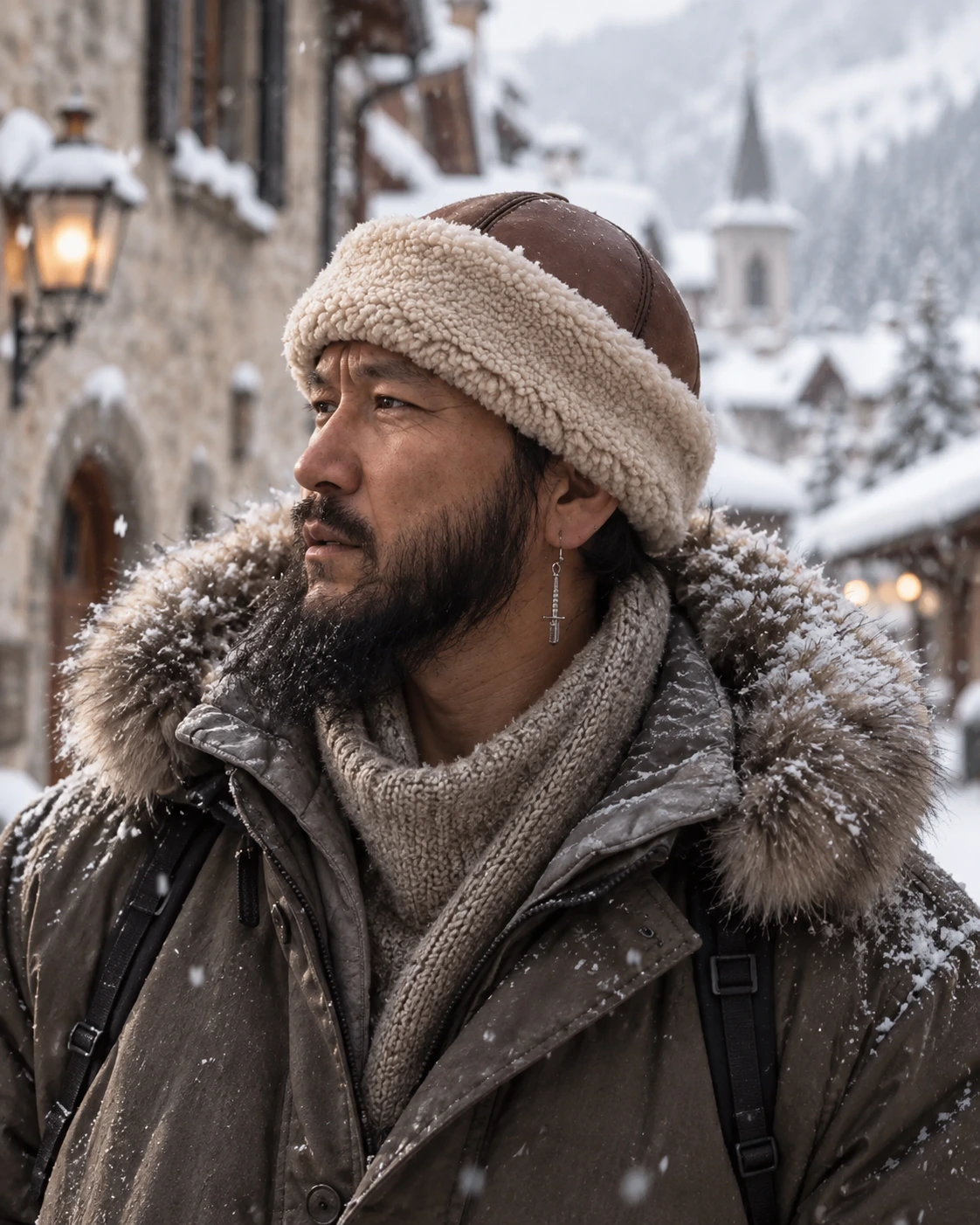
A shearling hat is generally a hat using wool-on sheepskin in its construction. The wool remains attached to the hide instead of being applied as a separate textile lining.
In practice, the word “shearling” is often chosen when the visible wool texture is an important part of the product. A black winter hat, for example, may combine a black lamb-leather crown with a natural black sheepskin-fur band and real sheepskin lining while being presented to shoppers as a shearling hat.
The term can therefore describe both material and retail styling. Always check the detailed material specification instead of assuming that every product using the word “shearling” has the same construction.

Why Hat Construction Matters More Than the Label
Two hats described with the same keyword can behave very differently in winter. The most useful way to compare them is to separate the hat into three areas:
- Exterior or crown: the main outer structure of the hat.
- Band, trim or ear-flap material: the visible wool or fur around the lower edge or sides.
- Interior lining: the material that sits against the head.
At DeriSitesi, some winter models use a genuine lamb-leather crown together with a natural sheepskin-fur band and real sheepskin interior. That construction is different from a hat made entirely from a single wool-on hide, even if both appear in sheepskin or shearling searches.
Product-level transparency matters because it helps buyers understand where softness, warmth, wind resistance and structure are actually coming from.
Which Is Warmer: Sheepskin or Shearling?
There is no universal rule that one label is always warmer. Warmth depends on construction, wool density, lining coverage and fit.
A densely lined sheepskin hat that covers the ears can feel warmer in wind than a lighter shearling-trimmed cap with little side coverage. Likewise, a properly fitted shearling-lined trapper hat can retain heat better than a thick but loose hat that allows cold air to circulate.
When comparing warmth, look at:
- wool density and thickness;
- whether the entire interior or only part of it is wool-lined;
- ear coverage;
- how closely the lower edge sits around the head;
- whether the outer material reduces direct wind exposure;
- and whether the hat is intended for light winter use or prolonged cold-weather wear.
Avoid relying on unsupported temperature claims. A hat does not perform at one fixed temperature for every person because wind, humidity, activity level and individual cold tolerance all matter.
Wind Protection and Ear Coverage
Material is only part of winter performance. Hat shape matters too.
A compact sheepskin or shearling beanie can insulate the crown very well but may leave the ears less protected. An ushanka or trapper-style hat with wool-lined ear flaps can cover the sides of the head more completely.
If you spend time outdoors in wind, compare the actual ear coverage rather than assuming a thicker-looking hat is automatically better. Our Trapper Hat Buying Guide explains ear flaps, chin straps and coverage in more detail.

How Sheepskin and Shearling Affect Fit
Natural wool takes up space inside a hat. A thick sheepskin lining can make the interior feel smaller than a thin textile lining even when the external measurements look similar.
A winter hat should feel secure but should not create painful pressure on the forehead or temples. If the lining is dense, the first fit may also feel slightly fuller around the head than a lightly lined leather cap.
DeriSitesi adult sizing generally runs from XS (53–54 cm) to 3XL (65–66 cm) on suitable models. Use your actual head circumference rather than choosing only by S, M, L or XL.
For measurement instructions and cm/inch conversions, see the Leather Hat Sizing Guide.
Natural Wool, Texture and Color Variation
Natural sheepskin and shearling are not perfectly uniform synthetic materials. Small differences in wool curl, density, direction and tone can occur from one piece to another.
These variations are usually part of the character of a natural material rather than a defect. However, major inconsistencies in construction, damaged leather, loose stitching or material that does not match the stated product description are separate quality issues.
When ordering online, look for close-up photographs that show both the leather surface and the wool. Product photos from more than one angle are especially useful for understanding texture and trim placement.
How to Care for Sheepskin and Shearling Hats
Sheepskin and shearling should be treated as natural leather-and-wool materials rather than ordinary washable textiles.
- Avoid soaking: do not intentionally saturate the hat with water.
- Dry naturally: if the hat becomes damp, let it dry at room temperature away from radiators, hair dryers and direct high heat.
- Do not crush for storage: keep the crown supported so the shape is not permanently flattened.
- Brush wool gently: if the wool becomes compressed, use a suitable soft brush only when appropriate for the material.
- Store clean and dry: avoid sealing a damp hat inside plastic.
- Test cleaners first: leather and wool can react differently to cleaning products.
If a product has both smooth leather and visible wool, remember that the two surfaces may require different care. A treatment that is suitable for smooth leather may not be appropriate for the wool side. Our Leather Hat Care & Storage Guide covers gentle cleaning, natural drying and off-season storage.
What to Check Before Buying Online
Before ordering a sheepskin or shearling hat, check these details:
- Exact exterior material: lamb leather, sheepskin, textile or another material.
- Exact lining material: real sheepskin wool, textile, faux fur or another lining.
- Visible trim: confirm whether the band or edge is natural wool, fur or faux fur.
- Head circumference: use centimeters or inches rather than relying only on letter sizes.
- Ear coverage: important for outdoor and windy conditions.
- Product photos: inspect close-ups of the leather, wool and seams.
- Care instructions: especially if you expect regular snow or wet-weather use.
- Return and exchange terms: particularly for international orders where fit matters.
If the product description only says “fur hat” or “shearling style” without identifying the actual materials, ask for clarification before buying.
What Buyers Notice Most
What DeriSitesi buyers often mention
Public Etsy feedback frequently highlights craftsmanship, warmth, fit, material feel, accurate sizing and fast international delivery.
For natural winter hats, the combination of correct sizing and material quality matters because a dense lining can only work comfortably when the hat fits properly.
Which One Should You Choose?
Choose based on construction rather than terminology alone.
- Choose a sheepskin-focused hat when you want natural wool insulation and the product clearly explains where the sheepskin is used.
- Choose a shearling-focused hat when you like the wool-on-hide construction and a more even, trimmed wool appearance.
- Choose a leather-crown + sheepskin combination when you want the structure and wind resistance of leather together with natural wool around the band or interior.
- Choose an ear-flap design when side-head and ear coverage matter more than a compact silhouette.
If two hats use almost the same materials but different marketing terms, compare the actual lining, wool density, ear coverage and size before deciding.
Explore Handmade Sheepskin Winter Hats
Compare current leather and sheepskin winter hats by crown material, natural wool construction, lining, shape and size.
FAQ
Is sheepskin the same as shearling?
They overlap, but the terms are not always identical. Sheepskin is sheep hide with the wool attached. Shearling generally refers to wool-on sheepskin associated with a shorn fleece and is also used broadly as a retail term.
Are shearling hats warmer than sheepskin hats?
Not automatically. Warmth depends on wool density, lining coverage, hat shape, ear protection and fit rather than the label alone.
Is a lamb-leather hat with sheepskin lining a sheepskin hat?
It can reasonably be described as a sheepskin-lined or sheepskin winter hat, but a precise product description should make clear that the exterior is lamb leather and the interior is sheepskin.
Does natural sheepskin vary in color and texture?
Yes. Natural wool can show small differences in curl, density and tone. These variations are normal when they are consistent with the stated material and quality of the product.
Can I wash a sheepskin or shearling hat in a washing machine?
Do not assume machine washing is safe. Leather and wool can both be damaged by water, agitation, detergent and heat. Follow the care instructions for the specific hat.
How should a sheepskin hat fit?
It should feel secure without painful pressure. Dense natural wool can make the interior feel fuller, so use your actual head circumference and the specific product size chart.
[…] terminology can be confusing, so if you are unsure what you own, see our Sheepskin vs Shearling Hats […]
[…] For a material-focused comparison, see Sheepskin vs Shearling Hats. […]